🚚 Free Worldwide Shipping on All Orders!Shop Now

Tang Dynasty Terracotta Horse with Rider
Tang Dynasty Terracotta Horse with Rider
Circa 618–907 CE
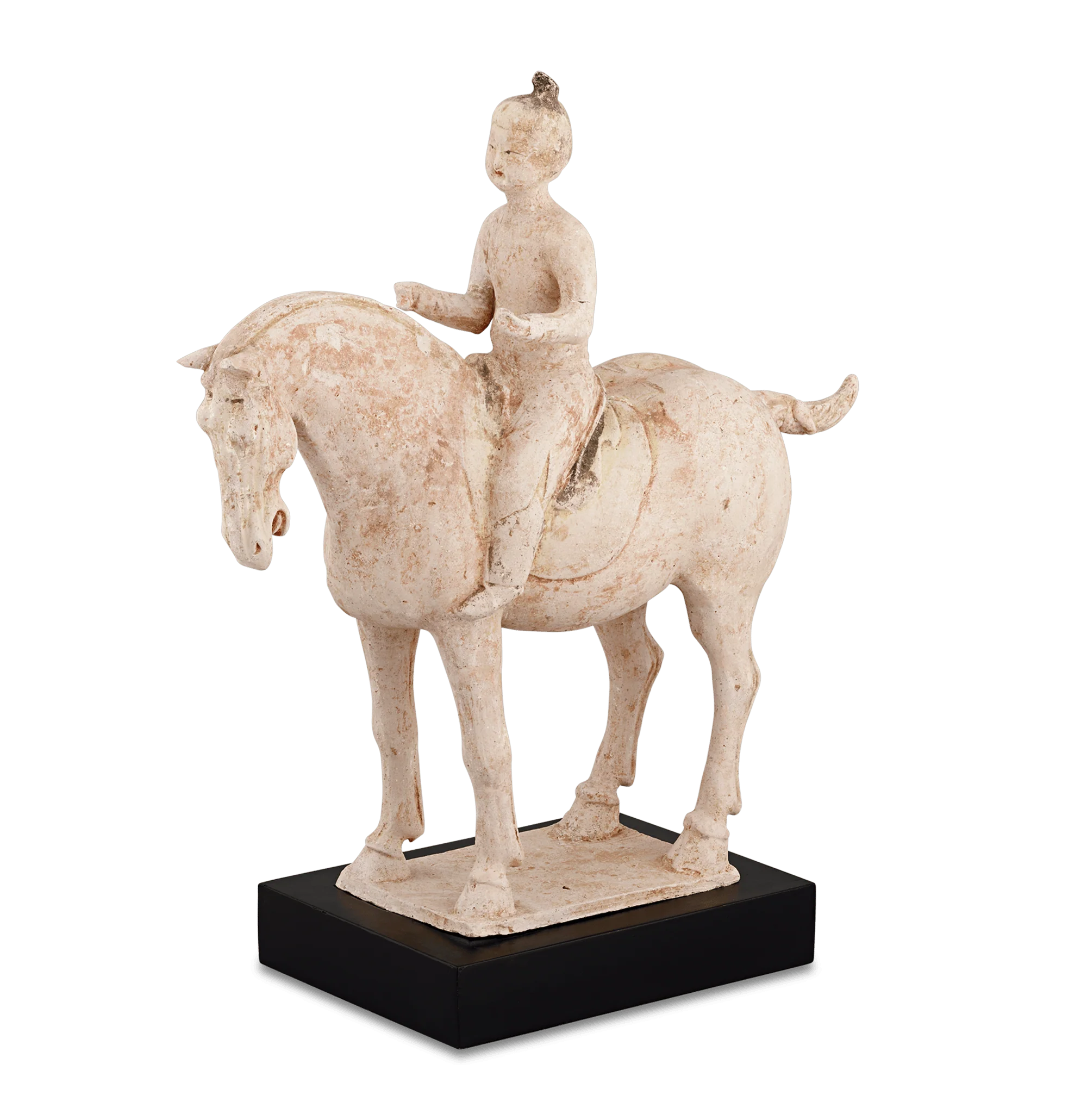
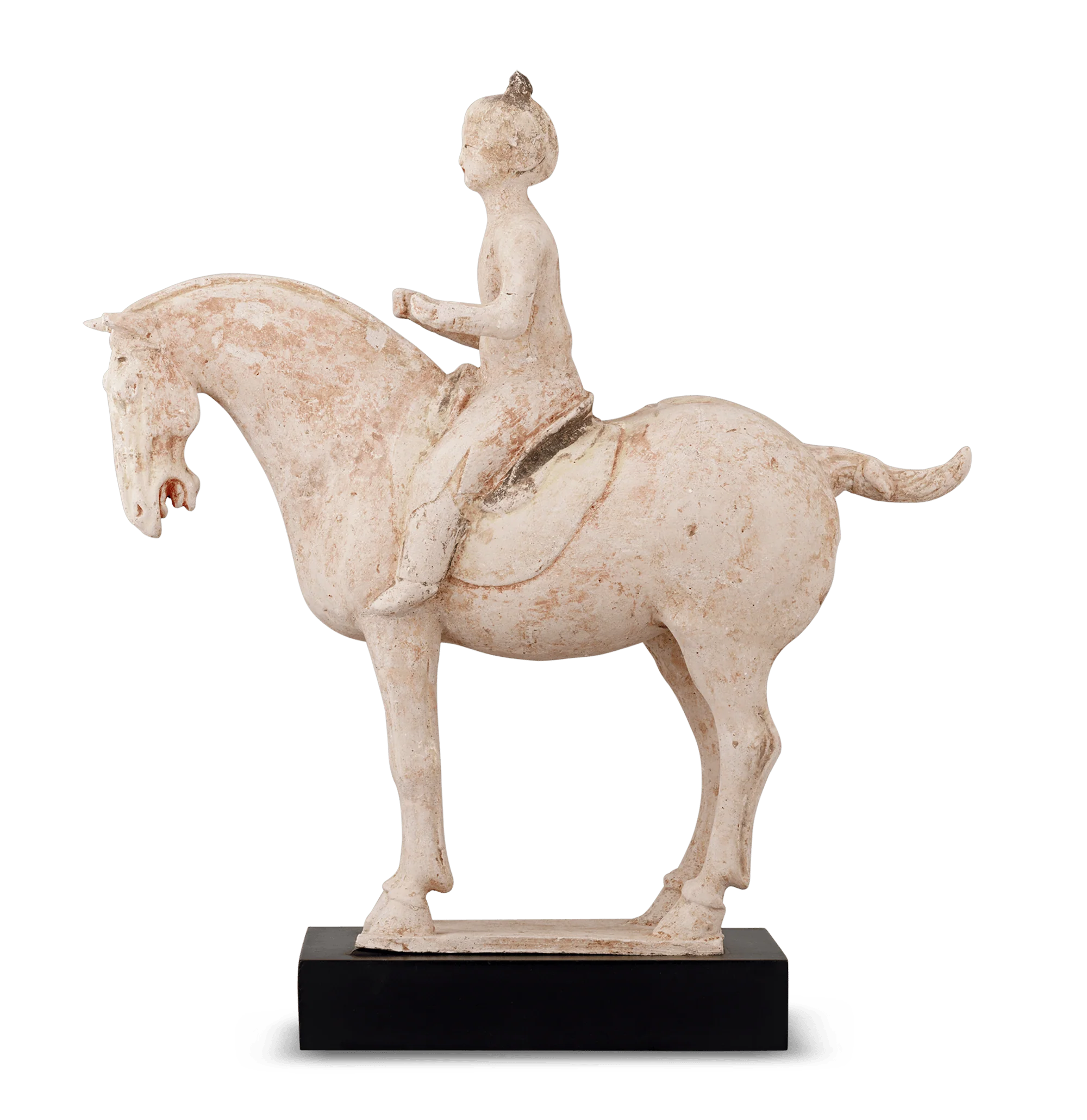
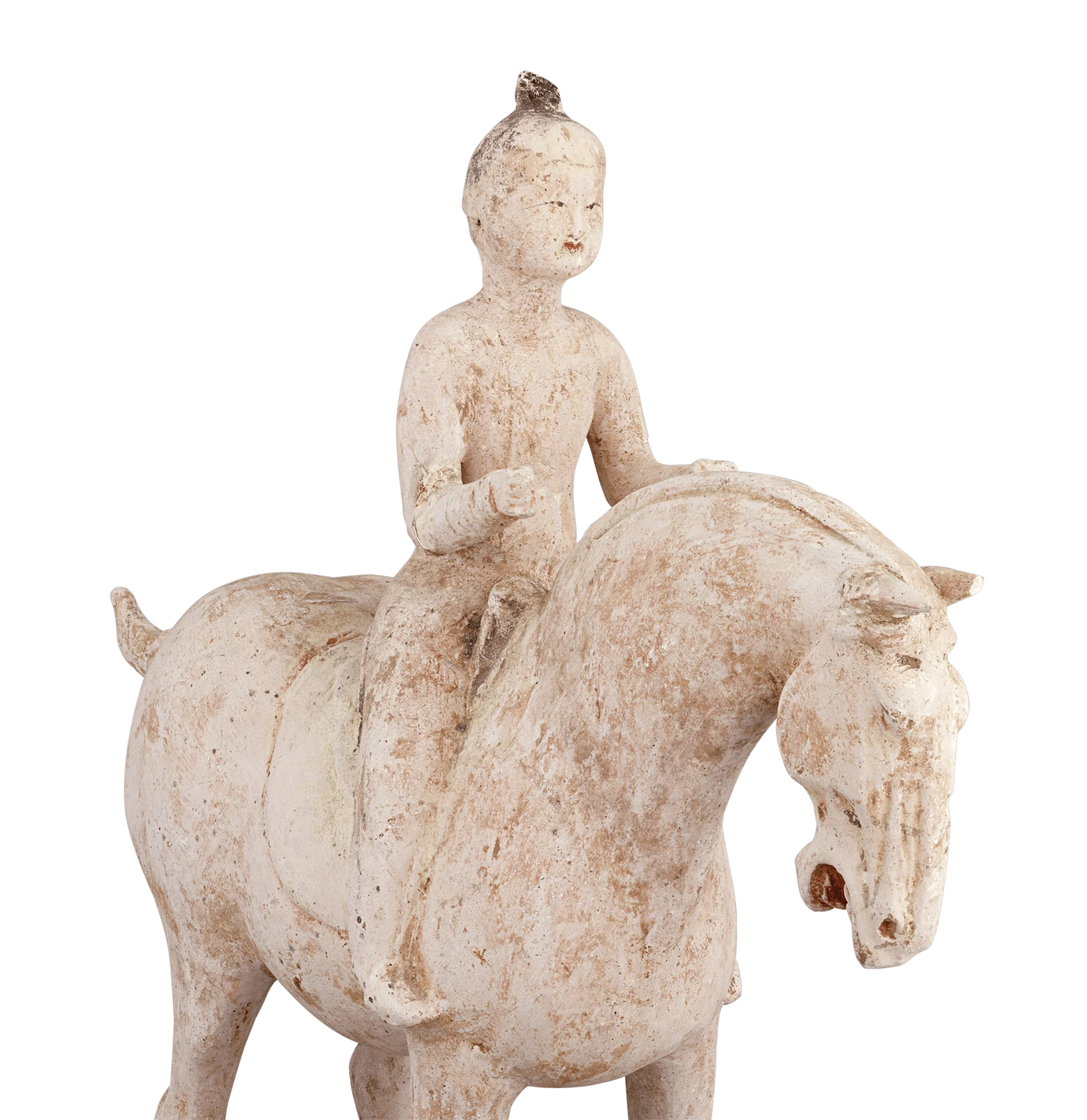
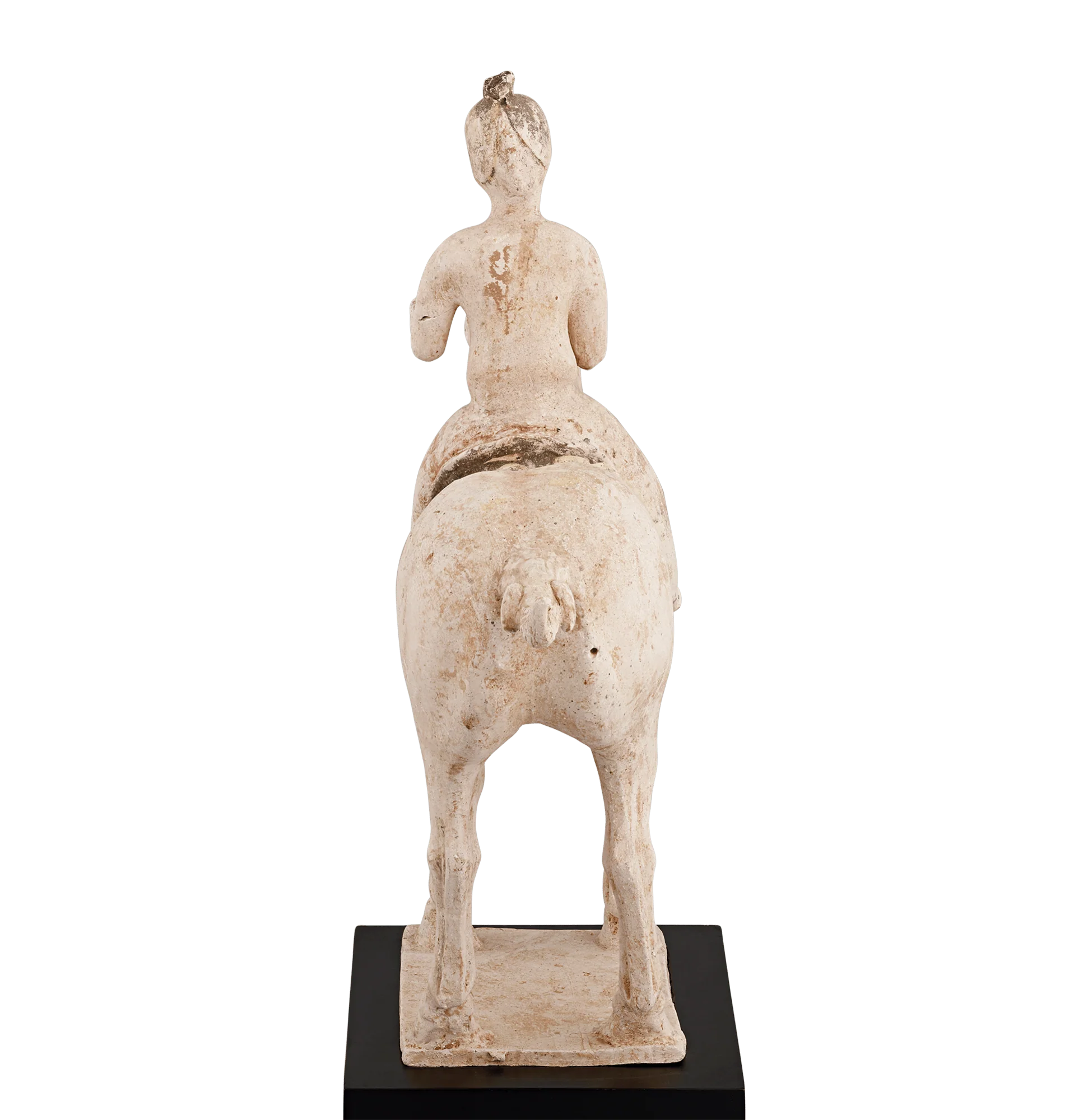
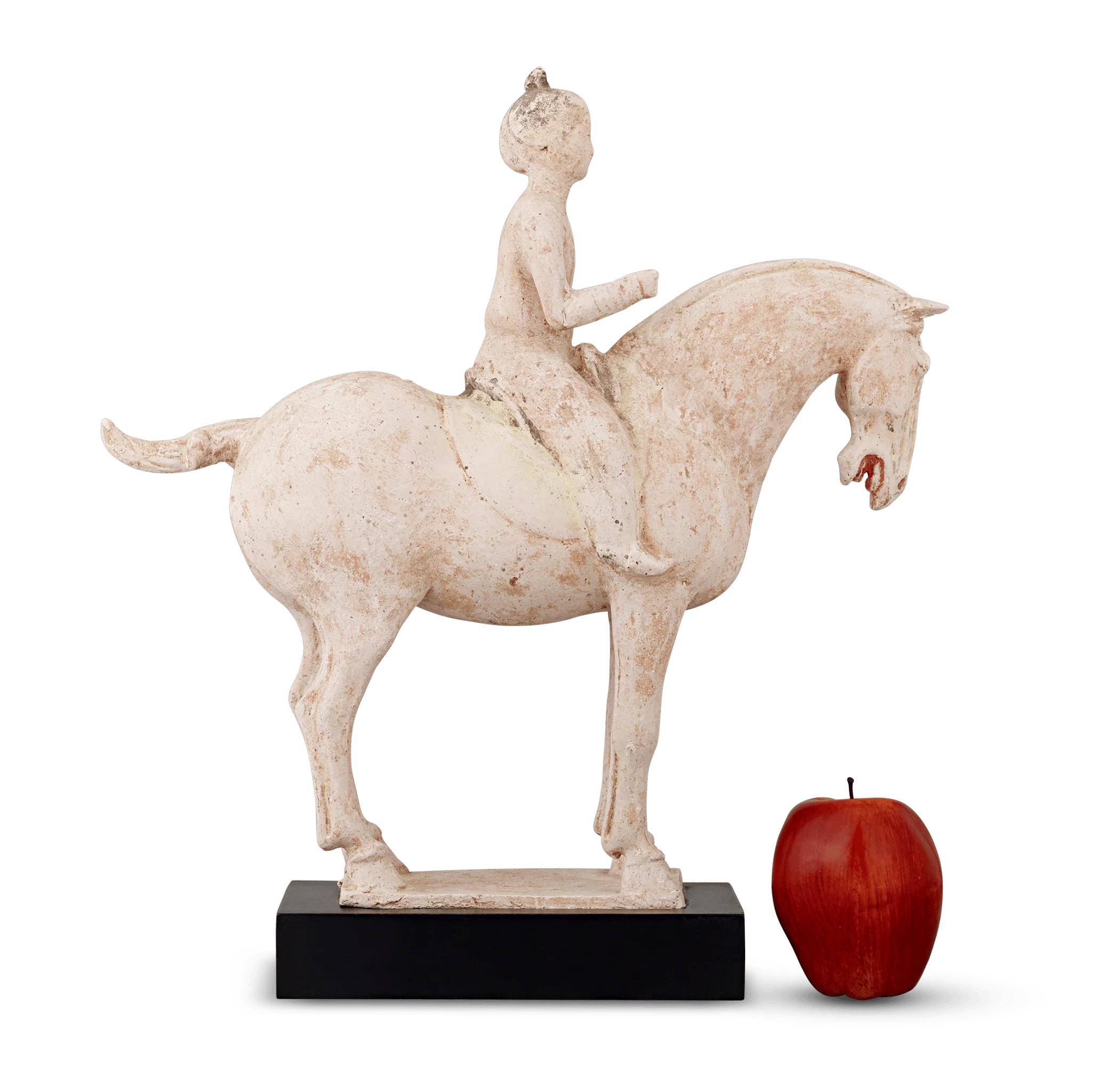
This Tang dynasty terracotta horse with rider is sculpted with a calm authority and balanced proportions characteristic of the period’s finest funerary figures. The horse stands firmly on all four legs, its head gently lowered, while the rider sits upright, conveying quiet composure. Traces of original pigment remain across the surface, which is highly rare.
During the Tang dynasty, horses were symbols of status, military strength and imperial power, reflecting China’s expanded reach and cultural confidence. Equestrian figures such as this were created as mingqi—funerary objects placed in tombs to serve and protect the deceased in the afterlife. The mounted rider underscores the importance of cavalry and horsemanship in Tang society, particularly within elite and courtly contexts shaped by Silk Road exchange and cosmopolitan influence.
15” high x 14 1/2” wide x 4 1/4” deep
Provenance:
Private collection, Florida
M.S. Rau, New Orleans
Circa 618–907 CE
This Tang dynasty terracotta horse with rider is sculpted with a calm authority and balanced proportions characteristic of the period’s finest funerary figures. The horse stands firmly on all four legs, its head gently lowered, while the rider sits upright, conveying quiet composure. Traces of original pigment remain across the surface, which is highly rare.
During the Tang dynasty, horses were symbols of status, military strength and imperial power, reflecting China’s expanded reach and cultural confidence. Equestrian figures such as this were created as mingqi—funerary objects placed in tombs to serve and protect the deceased in the afterlife. The mounted rider underscores the importance of cavalry and horsemanship in Tang society, particularly within elite and courtly contexts shaped by Silk Road exchange and cosmopolitan influence.
15” high x 14 1/2” wide x 4 1/4” deep
Provenance:
Private collection, Florida
M.S. Rau, New Orleans
$19,850.00
Tang Dynasty Terracotta Horse with Rider—
$19,850.00
Product Information
Product Information
Shipping & Returns
Shipping & Returns
Description
Tang Dynasty Terracotta Horse with Rider
Circa 618–907 CE
This Tang dynasty terracotta horse with rider is sculpted with a calm authority and balanced proportions characteristic of the period’s finest funerary figures. The horse stands firmly on all four legs, its head gently lowered, while the rider sits upright, conveying quiet composure. Traces of original pigment remain across the surface, which is highly rare.
During the Tang dynasty, horses were symbols of status, military strength and imperial power, reflecting China’s expanded reach and cultural confidence. Equestrian figures such as this were created as mingqi—funerary objects placed in tombs to serve and protect the deceased in the afterlife. The mounted rider underscores the importance of cavalry and horsemanship in Tang society, particularly within elite and courtly contexts shaped by Silk Road exchange and cosmopolitan influence.
15” high x 14 1/2” wide x 4 1/4” deep
Provenance:
Private collection, Florida
M.S. Rau, New Orleans
Circa 618–907 CE
This Tang dynasty terracotta horse with rider is sculpted with a calm authority and balanced proportions characteristic of the period’s finest funerary figures. The horse stands firmly on all four legs, its head gently lowered, while the rider sits upright, conveying quiet composure. Traces of original pigment remain across the surface, which is highly rare.
During the Tang dynasty, horses were symbols of status, military strength and imperial power, reflecting China’s expanded reach and cultural confidence. Equestrian figures such as this were created as mingqi—funerary objects placed in tombs to serve and protect the deceased in the afterlife. The mounted rider underscores the importance of cavalry and horsemanship in Tang society, particularly within elite and courtly contexts shaped by Silk Road exchange and cosmopolitan influence.
15” high x 14 1/2” wide x 4 1/4” deep
Provenance:
Private collection, Florida
M.S. Rau, New Orleans