🚚 Free Worldwide Shipping on All Orders!Shop Now



Silver Plate Epergne and Cruet Service
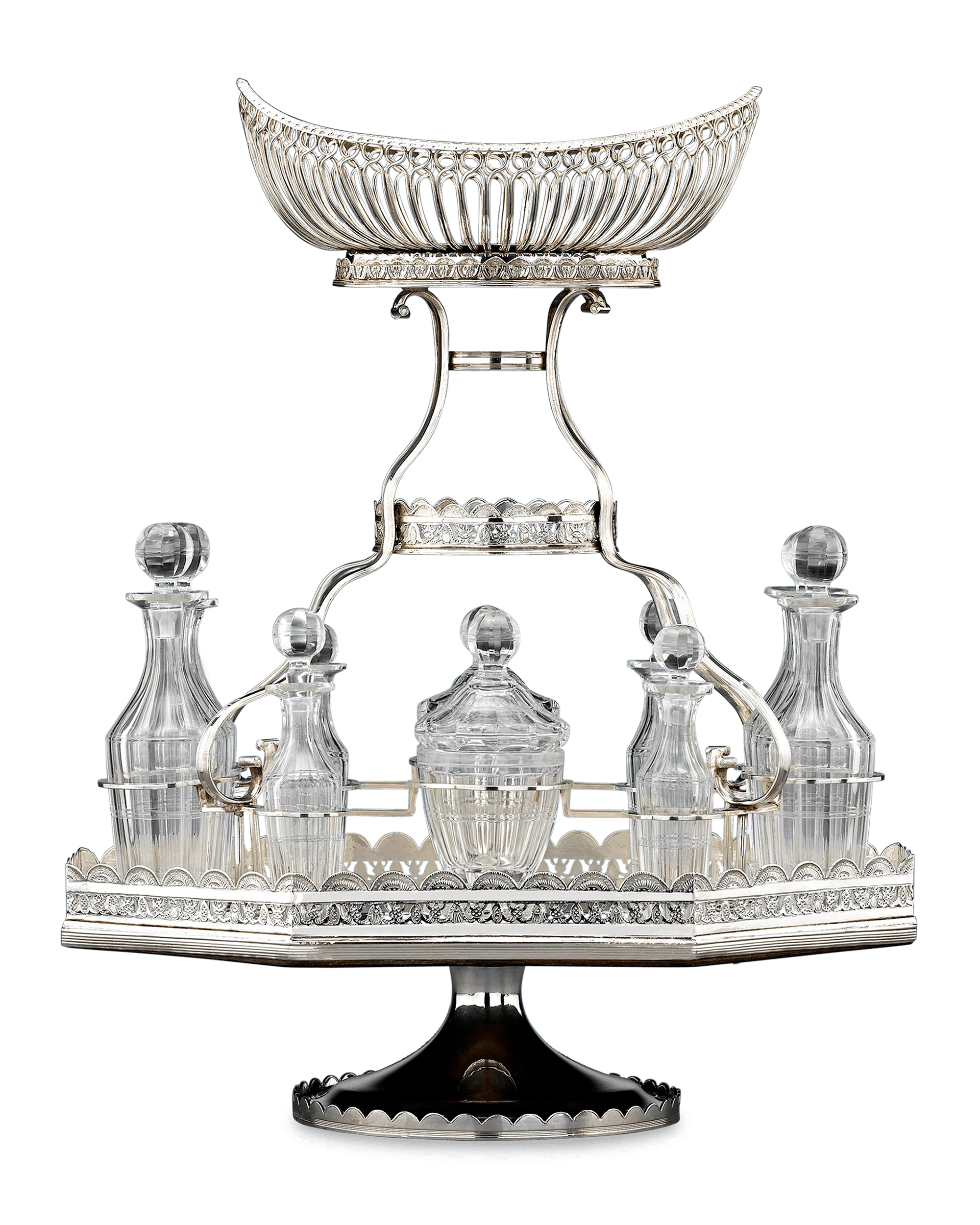
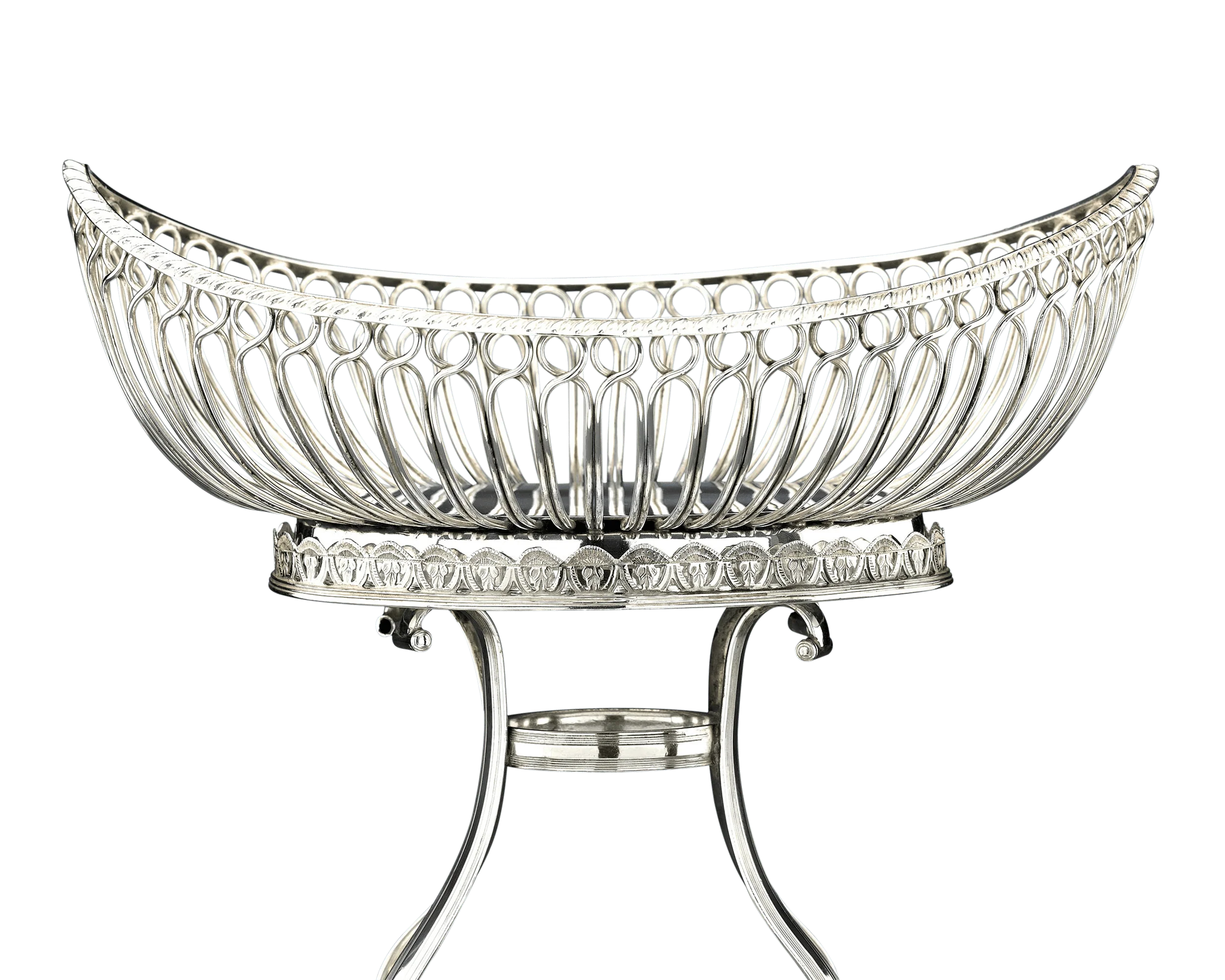
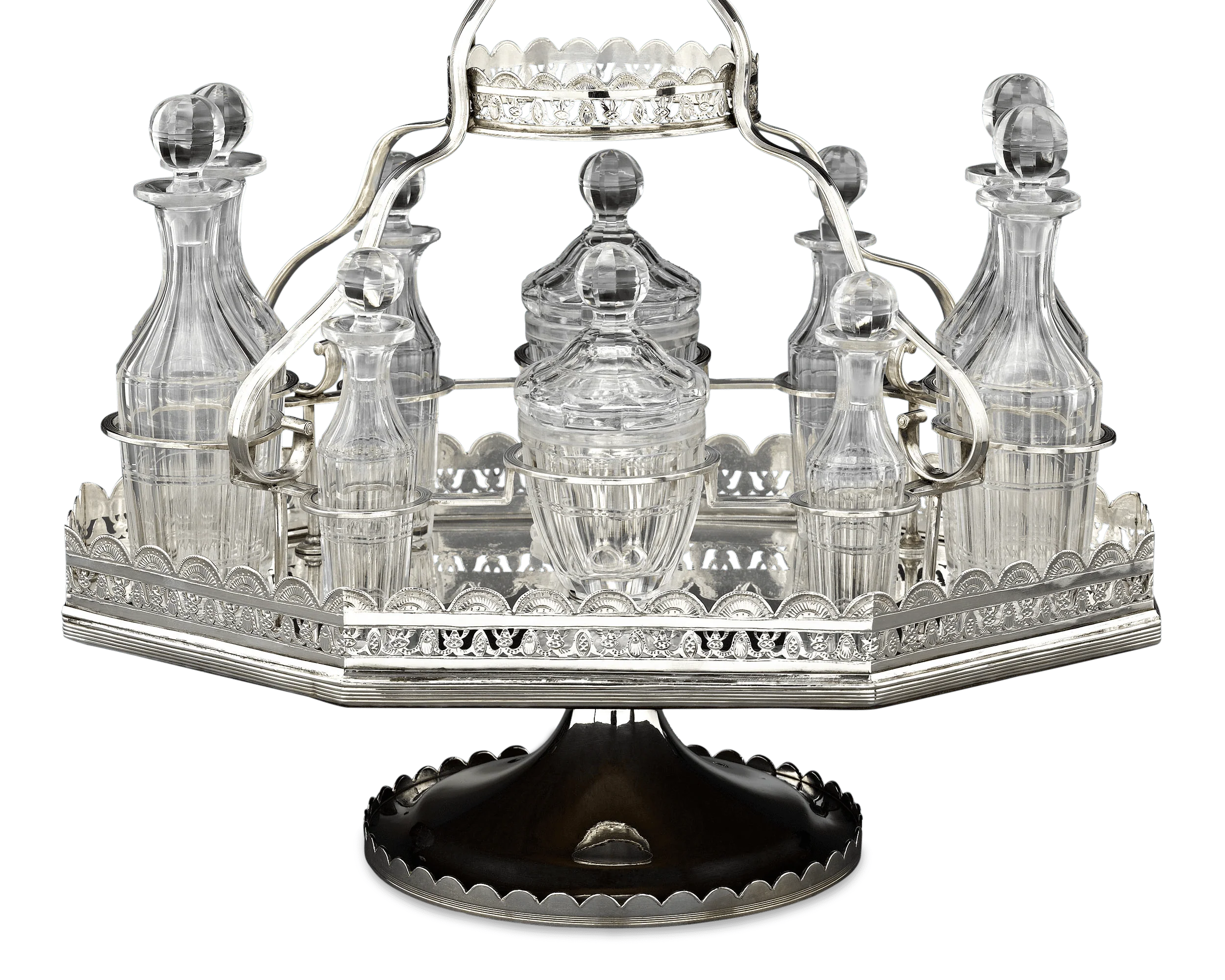
This elegant silver plate epergne is a rarity in that it also includes a full, cut-glass cruet set. This service’s delicate central basket is elevated above a plateau holding 10 finely-cut bottles, including two mustard pots, four small vinaigrettes and four larger vinaigrettes. Intricate bright-cut engraving along the pierced galleries completes this stunning piece.
An epergne is a dining table centerpiece, usually of silver, comprised of a central bowl and four or more dishes held by radiating branches, and used to serve pickles, fruits, nuts, sweetmeats, and other small items. The epergne’s center basket would have displayed flowers or exotic fruits. These multi-purpose pieces meant to facilitate a new dining style where guests helped themselves, rather than being served by butlers or footmen. According to several sources, the epergne, a word derived from the French "epargner," meaning thrifty, arrived in England in the first quarter of the 18th century. In England, epergnes were called “Save Alls,” noting the servant’s work that was saved by having items within arm’s reach on the table. The earliest record of an epergne is in 1725, and extant pieces date from the 1730s. In the late 19th century, similar pieces made largely of glass or porcelain and intended to hold flowers, came into fashion.
Circa 1890
17 1/2” length x 10 1/2” deep x 21 5/8” high
An epergne is a dining table centerpiece, usually of silver, comprised of a central bowl and four or more dishes held by radiating branches, and used to serve pickles, fruits, nuts, sweetmeats, and other small items. The epergne’s center basket would have displayed flowers or exotic fruits. These multi-purpose pieces meant to facilitate a new dining style where guests helped themselves, rather than being served by butlers or footmen. According to several sources, the epergne, a word derived from the French "epargner," meaning thrifty, arrived in England in the first quarter of the 18th century. In England, epergnes were called “Save Alls,” noting the servant’s work that was saved by having items within arm’s reach on the table. The earliest record of an epergne is in 1725, and extant pieces date from the 1730s. In the late 19th century, similar pieces made largely of glass or porcelain and intended to hold flowers, came into fashion.
Circa 1890
17 1/2” length x 10 1/2” deep x 21 5/8” high
$18,850.00
Silver Plate Epergne and Cruet Service—
$18,850.00
Product Information
Product Information
Shipping & Returns
Shipping & Returns
Description
This elegant silver plate epergne is a rarity in that it also includes a full, cut-glass cruet set. This service’s delicate central basket is elevated above a plateau holding 10 finely-cut bottles, including two mustard pots, four small vinaigrettes and four larger vinaigrettes. Intricate bright-cut engraving along the pierced galleries completes this stunning piece.
An epergne is a dining table centerpiece, usually of silver, comprised of a central bowl and four or more dishes held by radiating branches, and used to serve pickles, fruits, nuts, sweetmeats, and other small items. The epergne’s center basket would have displayed flowers or exotic fruits. These multi-purpose pieces meant to facilitate a new dining style where guests helped themselves, rather than being served by butlers or footmen. According to several sources, the epergne, a word derived from the French "epargner," meaning thrifty, arrived in England in the first quarter of the 18th century. In England, epergnes were called “Save Alls,” noting the servant’s work that was saved by having items within arm’s reach on the table. The earliest record of an epergne is in 1725, and extant pieces date from the 1730s. In the late 19th century, similar pieces made largely of glass or porcelain and intended to hold flowers, came into fashion.
Circa 1890
17 1/2” length x 10 1/2” deep x 21 5/8” high
An epergne is a dining table centerpiece, usually of silver, comprised of a central bowl and four or more dishes held by radiating branches, and used to serve pickles, fruits, nuts, sweetmeats, and other small items. The epergne’s center basket would have displayed flowers or exotic fruits. These multi-purpose pieces meant to facilitate a new dining style where guests helped themselves, rather than being served by butlers or footmen. According to several sources, the epergne, a word derived from the French "epargner," meaning thrifty, arrived in England in the first quarter of the 18th century. In England, epergnes were called “Save Alls,” noting the servant’s work that was saved by having items within arm’s reach on the table. The earliest record of an epergne is in 1725, and extant pieces date from the 1730s. In the late 19th century, similar pieces made largely of glass or porcelain and intended to hold flowers, came into fashion.
Circa 1890
17 1/2” length x 10 1/2” deep x 21 5/8” high