🚚 Free Worldwide Shipping on All Orders!Shop Now



Silver Jug by Hester Bateman
Silver Jug
Hester Bateman
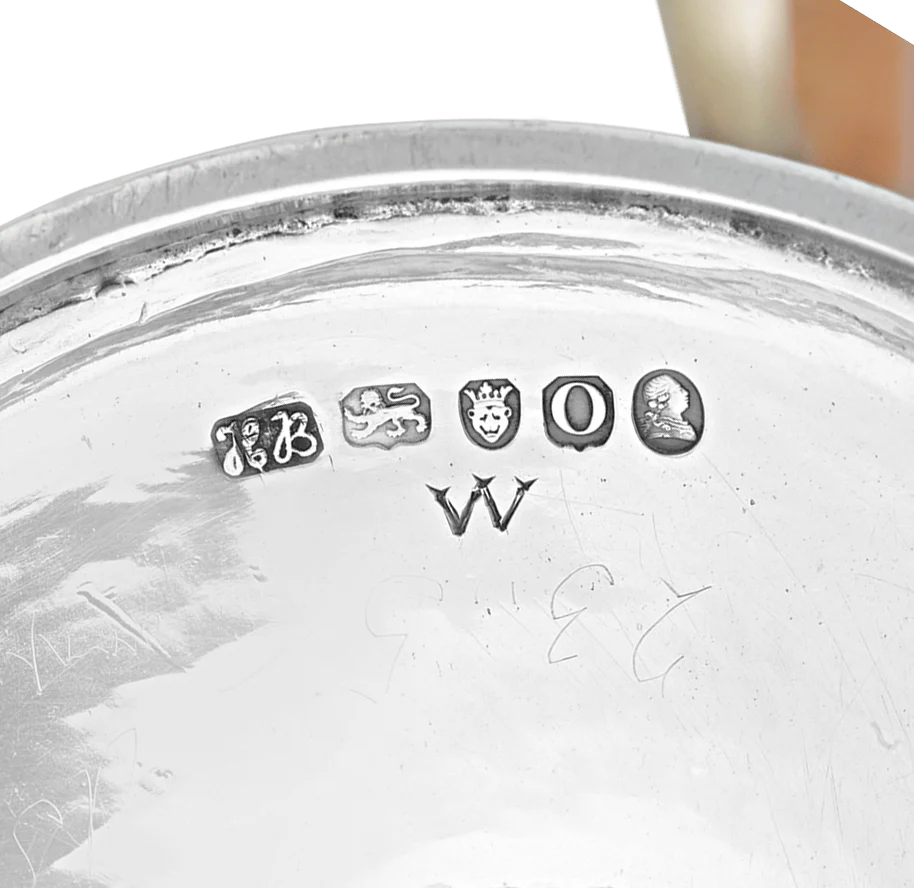
Hallmarked London, 1789
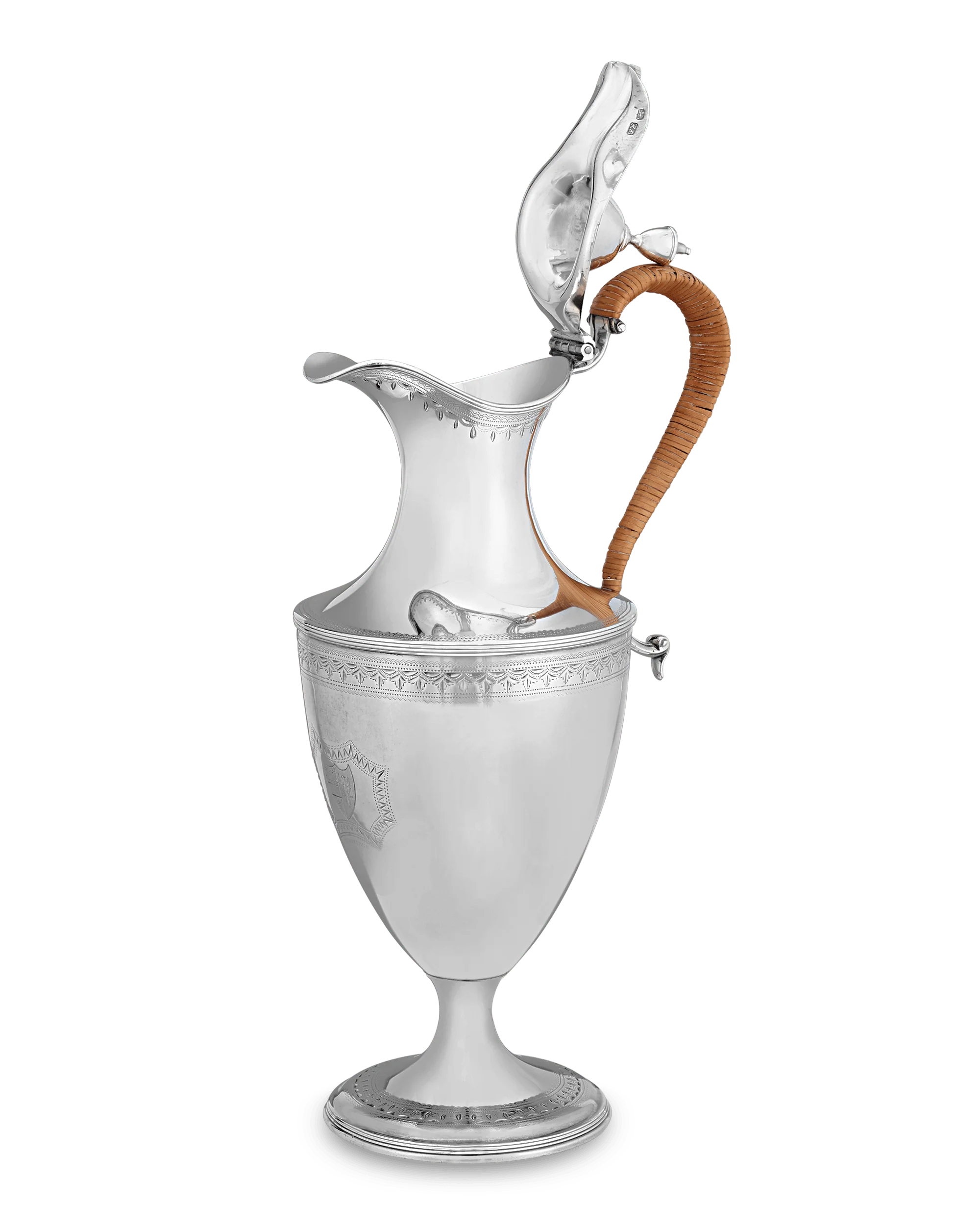
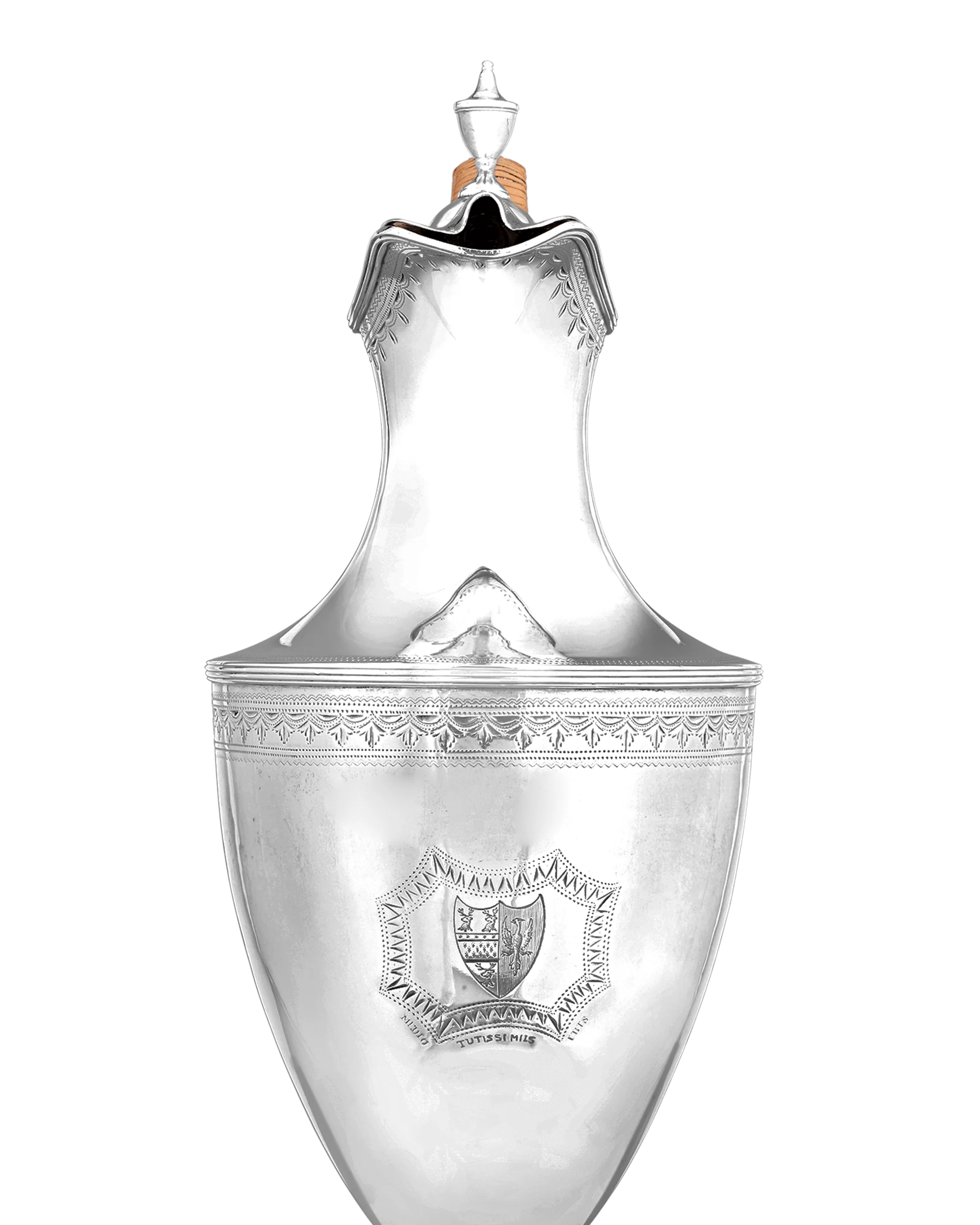
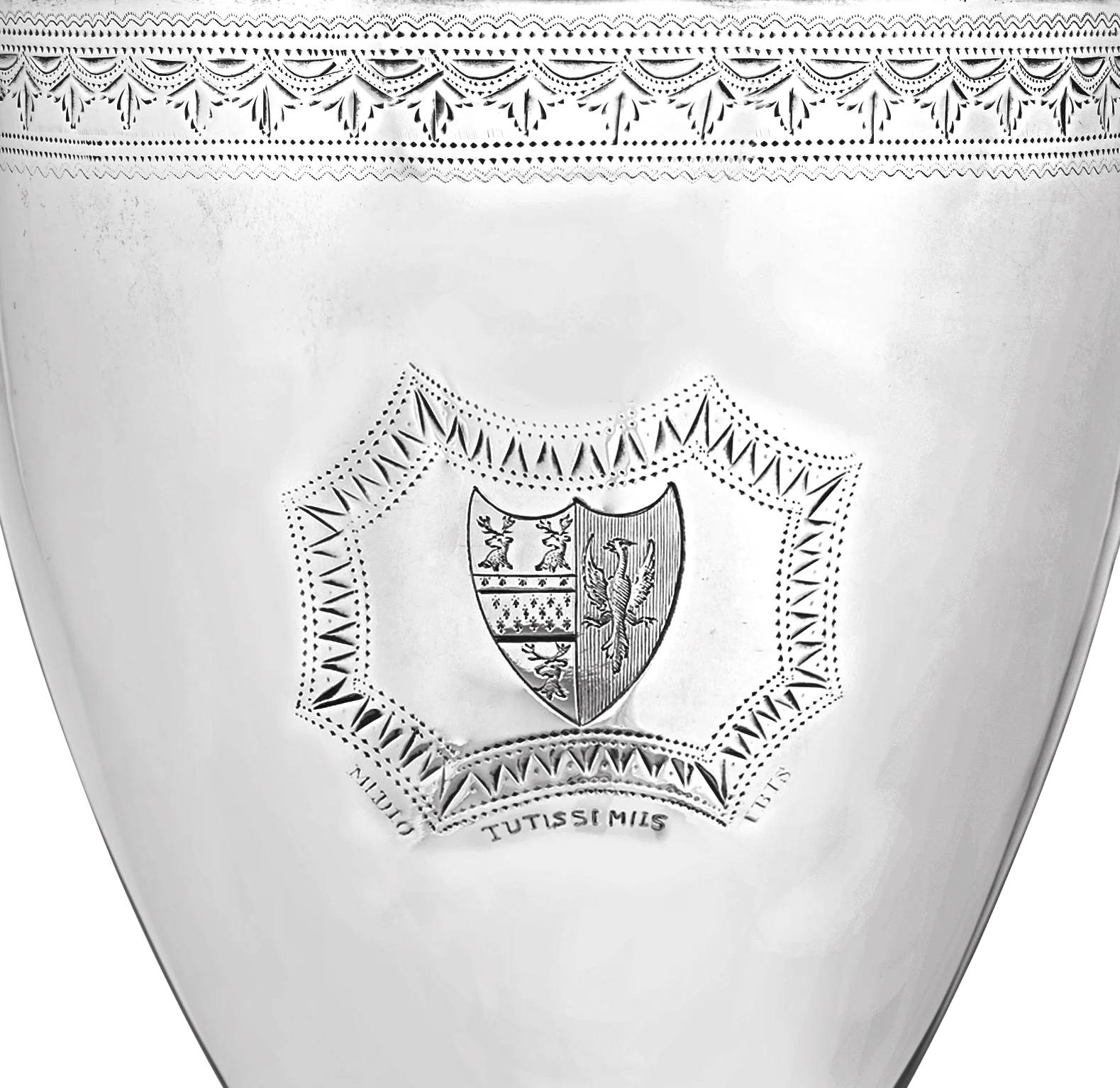
This Georgian period jug by the esteemed “Queen of Silver” Hester Bateman showcases the renowned bright-cut engraving characteristic of the Bateman workshop, featuring a coat of arms set within a geometrically patterned surround enhanced by lines of tiny dots. The eye is naturally drawn to the upward curve in the cover of the spout following the neoclassical urn finial which, despite its funerary associations, was a favored design among British patrons. The handle, wrapped in woven wicker, suggests the jug was intended for serving coffee, hot water or other hot beverages. The heraldic details include a fess ermine between three stags' heads impaling an eagle.
This work perfectly exemplified Bateman’s exceptional skill and dedication. After learning the trade alongside her husband, Bateman took over the family silversmithing business following his passing in 1760. Under her pioneering leadership, the company flourished until her retirement in 1790, when she entrusted the legacy to her sons and daughter-in-law, who continued the family tradition into the mid-19th century. A cornerstone of Bateman’s success was the implementation of cost-effective techniques, such as utilizing workable sheet silver.
12 3/8" high x 6 5/8" wide x 4 3/4" deep
Provenance:
M.S. Rau, New Orleans
Red McCombs Collection, Texas
M.S. Rau, New Orleans
Hester Bateman
Hallmarked London, 1789
This Georgian period jug by the esteemed “Queen of Silver” Hester Bateman showcases the renowned bright-cut engraving characteristic of the Bateman workshop, featuring a coat of arms set within a geometrically patterned surround enhanced by lines of tiny dots. The eye is naturally drawn to the upward curve in the cover of the spout following the neoclassical urn finial which, despite its funerary associations, was a favored design among British patrons. The handle, wrapped in woven wicker, suggests the jug was intended for serving coffee, hot water or other hot beverages. The heraldic details include a fess ermine between three stags' heads impaling an eagle.
This work perfectly exemplified Bateman’s exceptional skill and dedication. After learning the trade alongside her husband, Bateman took over the family silversmithing business following his passing in 1760. Under her pioneering leadership, the company flourished until her retirement in 1790, when she entrusted the legacy to her sons and daughter-in-law, who continued the family tradition into the mid-19th century. A cornerstone of Bateman’s success was the implementation of cost-effective techniques, such as utilizing workable sheet silver.
12 3/8" high x 6 5/8" wide x 4 3/4" deep
Provenance:
M.S. Rau, New Orleans
Red McCombs Collection, Texas
M.S. Rau, New Orleans
$4,497.50
Original: $12,850.00
-65%Silver Jug by Hester Bateman—
$12,850.00
$4,497.50Product Information
Product Information
Shipping & Returns
Shipping & Returns
Description
Silver Jug
Hester Bateman
Hallmarked London, 1789
This Georgian period jug by the esteemed “Queen of Silver” Hester Bateman showcases the renowned bright-cut engraving characteristic of the Bateman workshop, featuring a coat of arms set within a geometrically patterned surround enhanced by lines of tiny dots. The eye is naturally drawn to the upward curve in the cover of the spout following the neoclassical urn finial which, despite its funerary associations, was a favored design among British patrons. The handle, wrapped in woven wicker, suggests the jug was intended for serving coffee, hot water or other hot beverages. The heraldic details include a fess ermine between three stags' heads impaling an eagle.
This work perfectly exemplified Bateman’s exceptional skill and dedication. After learning the trade alongside her husband, Bateman took over the family silversmithing business following his passing in 1760. Under her pioneering leadership, the company flourished until her retirement in 1790, when she entrusted the legacy to her sons and daughter-in-law, who continued the family tradition into the mid-19th century. A cornerstone of Bateman’s success was the implementation of cost-effective techniques, such as utilizing workable sheet silver.
12 3/8" high x 6 5/8" wide x 4 3/4" deep
Provenance:
M.S. Rau, New Orleans
Red McCombs Collection, Texas
M.S. Rau, New Orleans
Hester Bateman
Hallmarked London, 1789
This Georgian period jug by the esteemed “Queen of Silver” Hester Bateman showcases the renowned bright-cut engraving characteristic of the Bateman workshop, featuring a coat of arms set within a geometrically patterned surround enhanced by lines of tiny dots. The eye is naturally drawn to the upward curve in the cover of the spout following the neoclassical urn finial which, despite its funerary associations, was a favored design among British patrons. The handle, wrapped in woven wicker, suggests the jug was intended for serving coffee, hot water or other hot beverages. The heraldic details include a fess ermine between three stags' heads impaling an eagle.
This work perfectly exemplified Bateman’s exceptional skill and dedication. After learning the trade alongside her husband, Bateman took over the family silversmithing business following his passing in 1760. Under her pioneering leadership, the company flourished until her retirement in 1790, when she entrusted the legacy to her sons and daughter-in-law, who continued the family tradition into the mid-19th century. A cornerstone of Bateman’s success was the implementation of cost-effective techniques, such as utilizing workable sheet silver.
12 3/8" high x 6 5/8" wide x 4 3/4" deep
Provenance:
M.S. Rau, New Orleans
Red McCombs Collection, Texas
M.S. Rau, New Orleans