🚚 Free Worldwide Shipping on All Orders!Shop Now

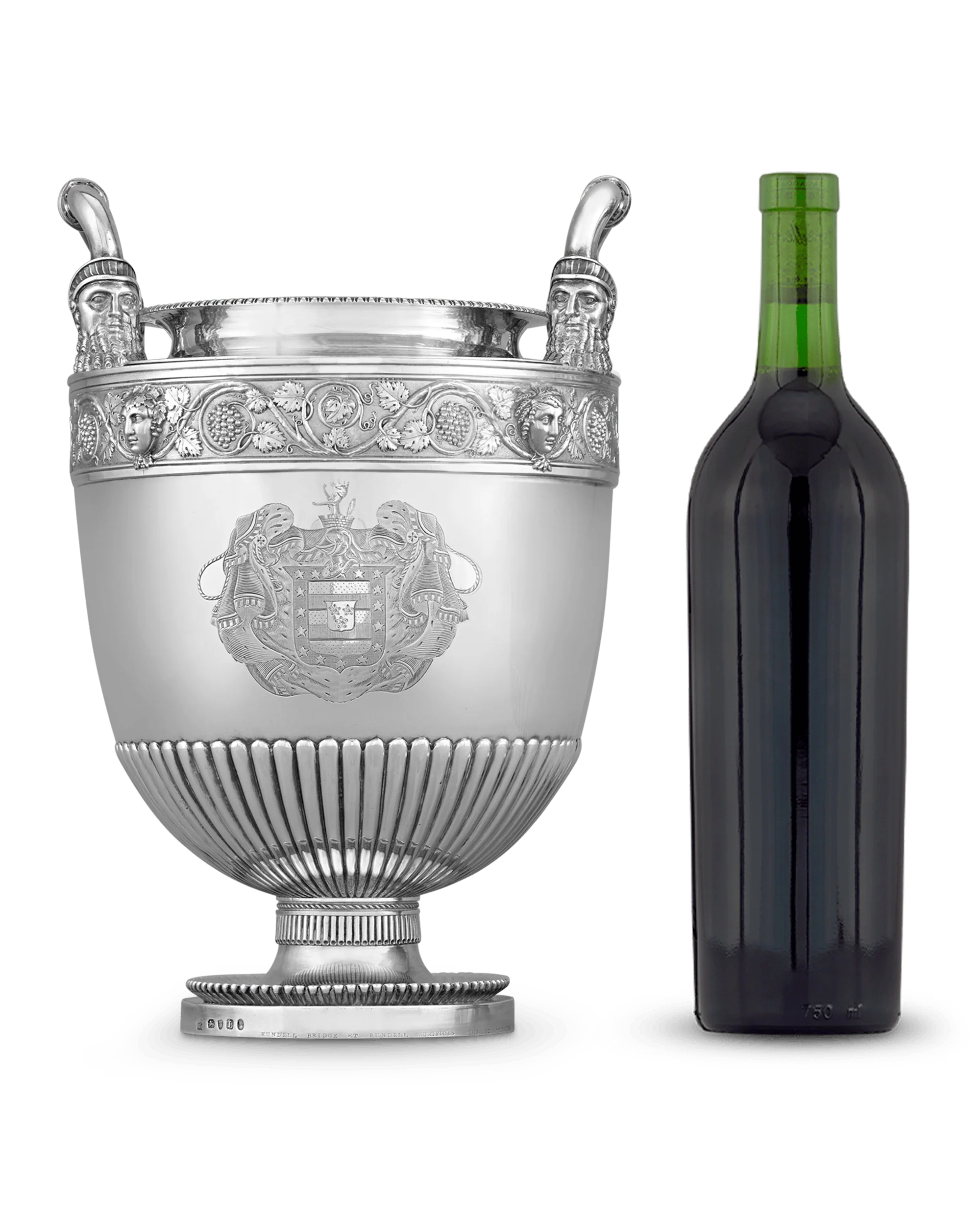
Set of Four George III Silver Wine Coolers by Rundell, Bridge & Rundell
Set of Four George III Silver Wine Coolers
Digby Scott and Benjamin Smith for Rundell, Bridge & Rundell
Hallmarked London, 1806
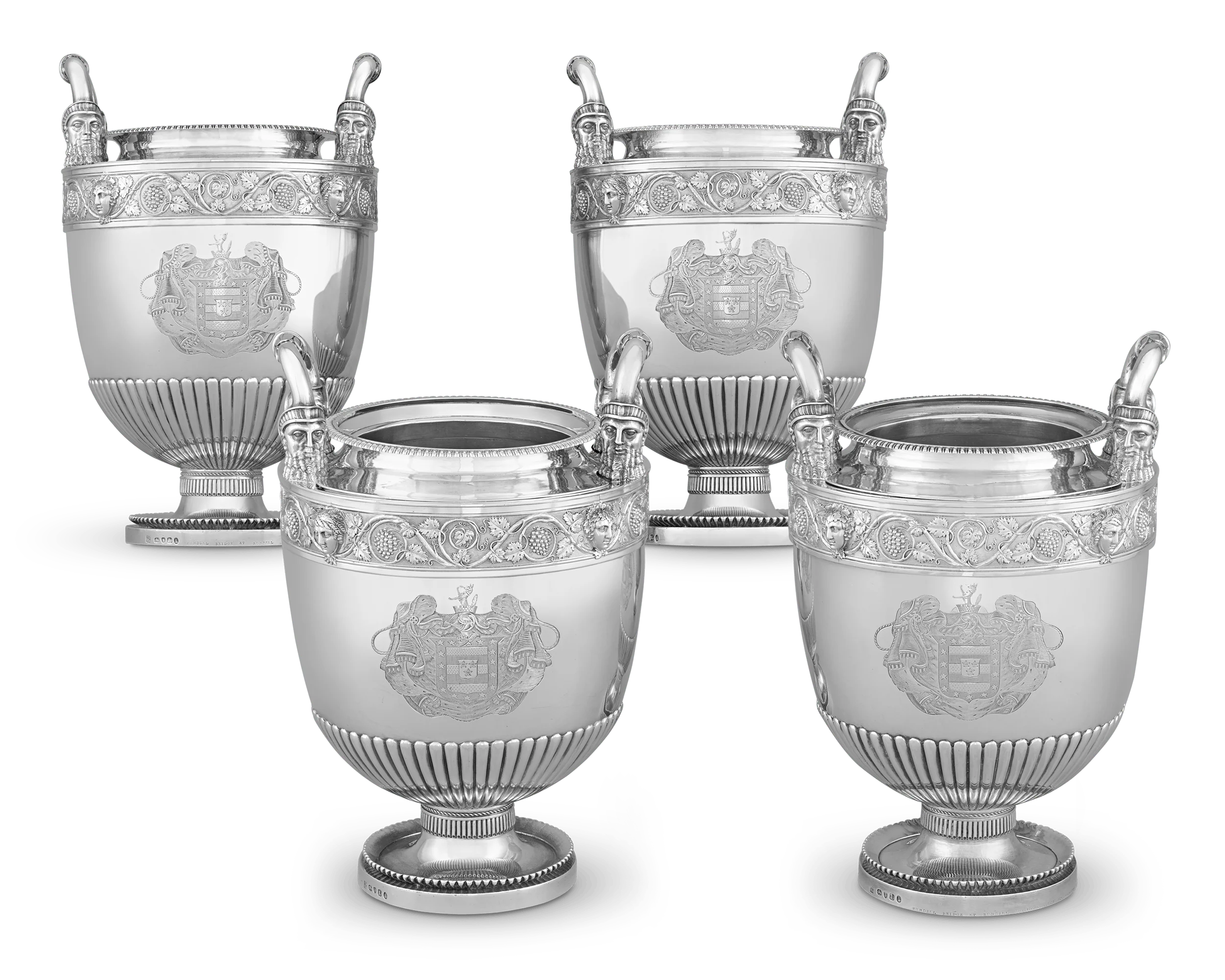
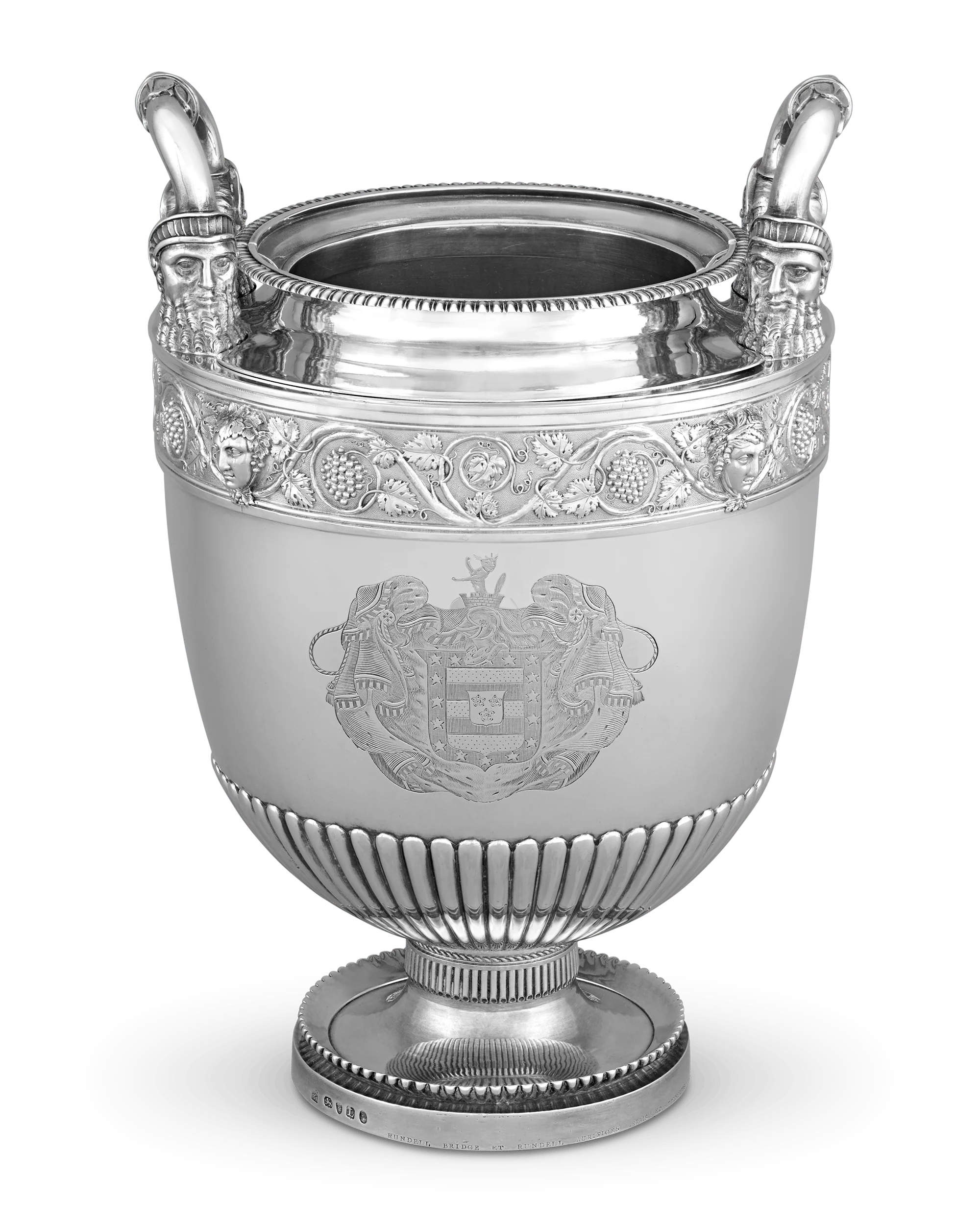
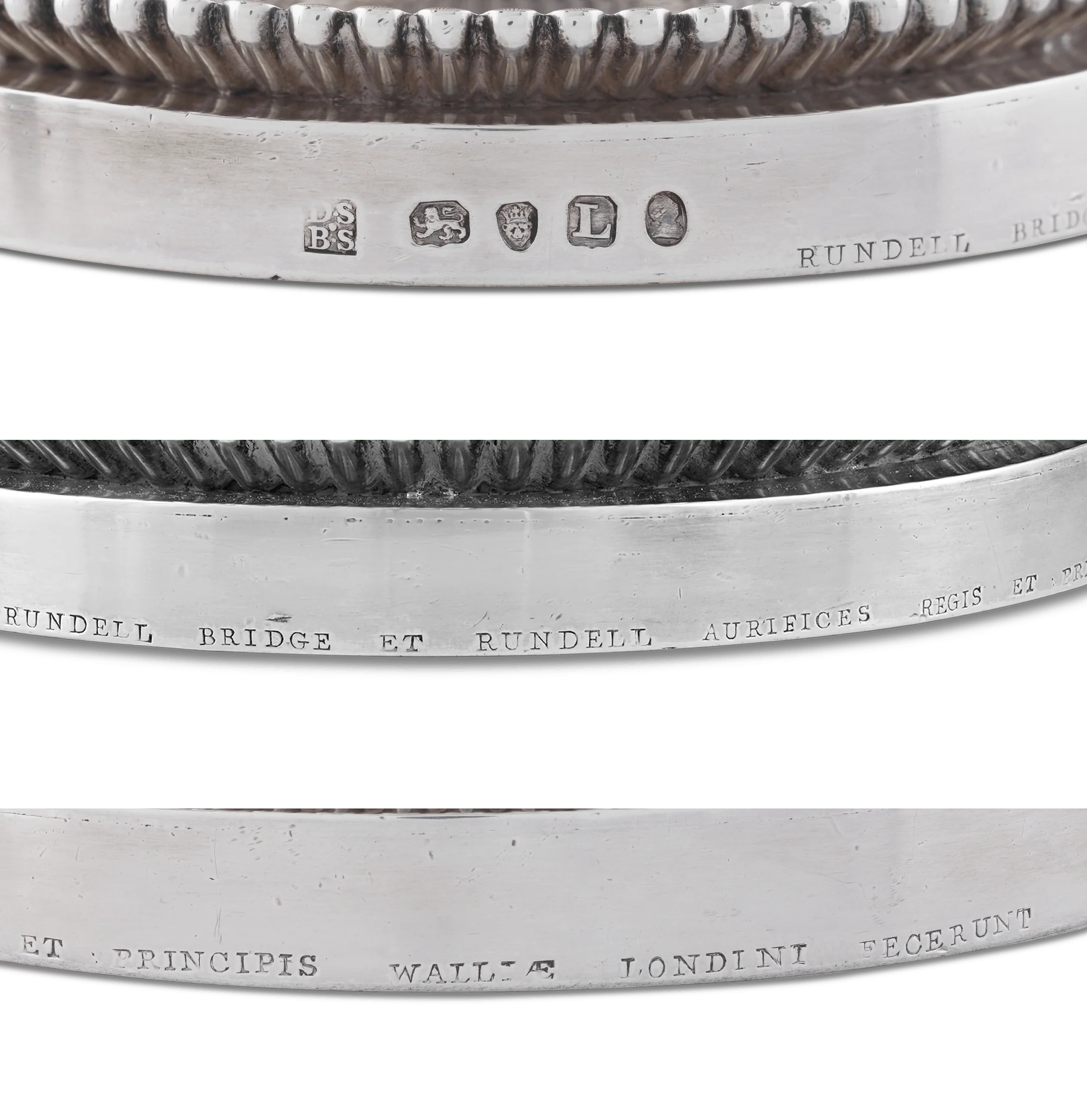
This magnificent set of four sterling silver wine coolers represents the height of Regency-era silver design and craftsmanship. Hallmarked London, 1806, they were produced by the royal silversmiths Rundell, Bridge & Rundell—official goldsmiths to King George III and the Prince Regent. Made by Digby Scott and Benjamin Smith, these vessels embody the firm’s unparalleled mastery in the Neoclassical idiom and the grandeur of early 19th-century English silver.
The coolers’ impressive combined weight of 391 troy ounces points to the opulence of a commission reserved for the aristocracy. In Georgian society, wine coolers were the ultimate expression of refinement. Ice itself was a luxury, and silver of this caliber could be commissioned only by the elite. These coolers would have cost nearly $1,000 in 1806, when a laborer earned only about the equivalent of $73 a year.
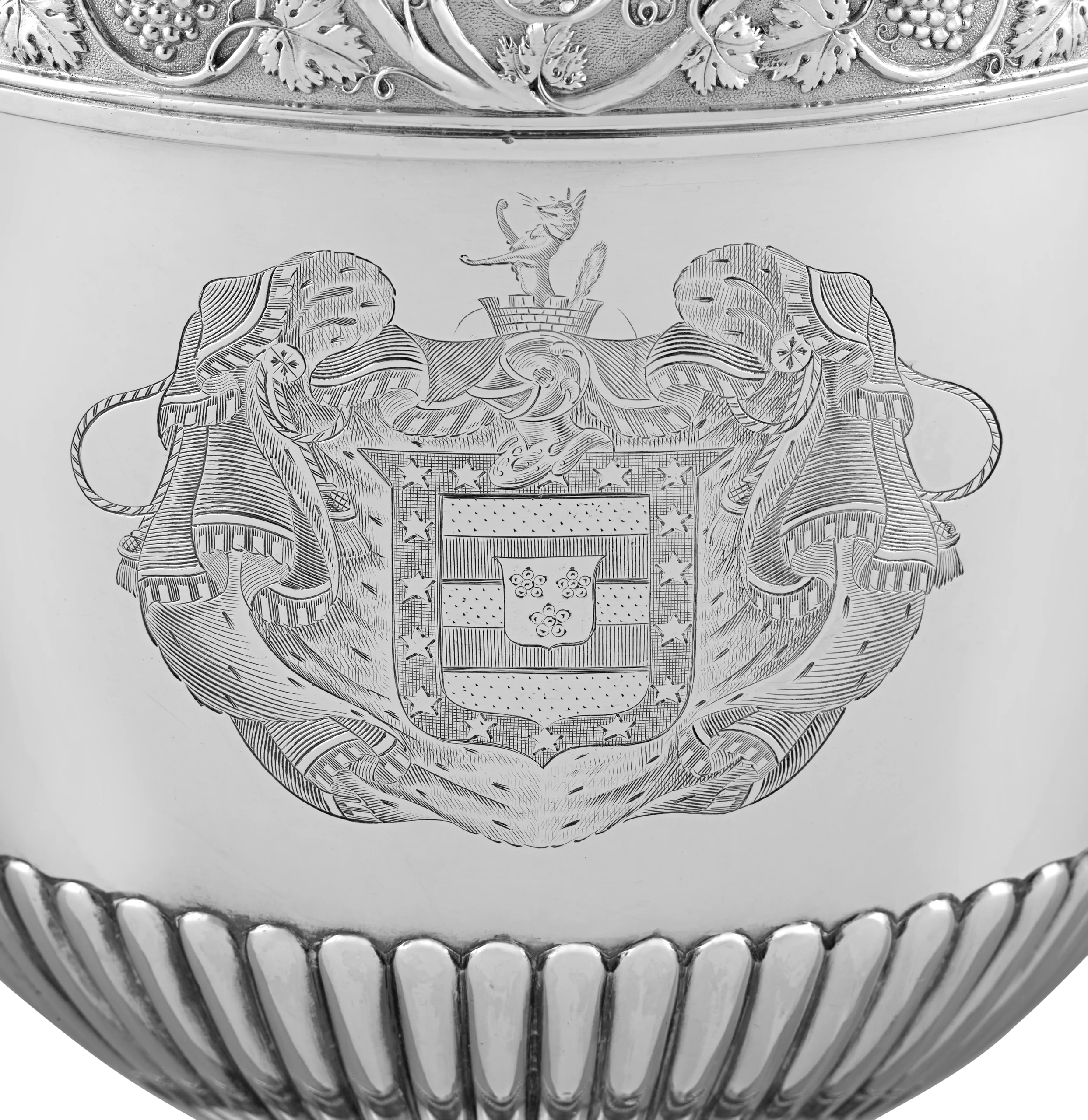
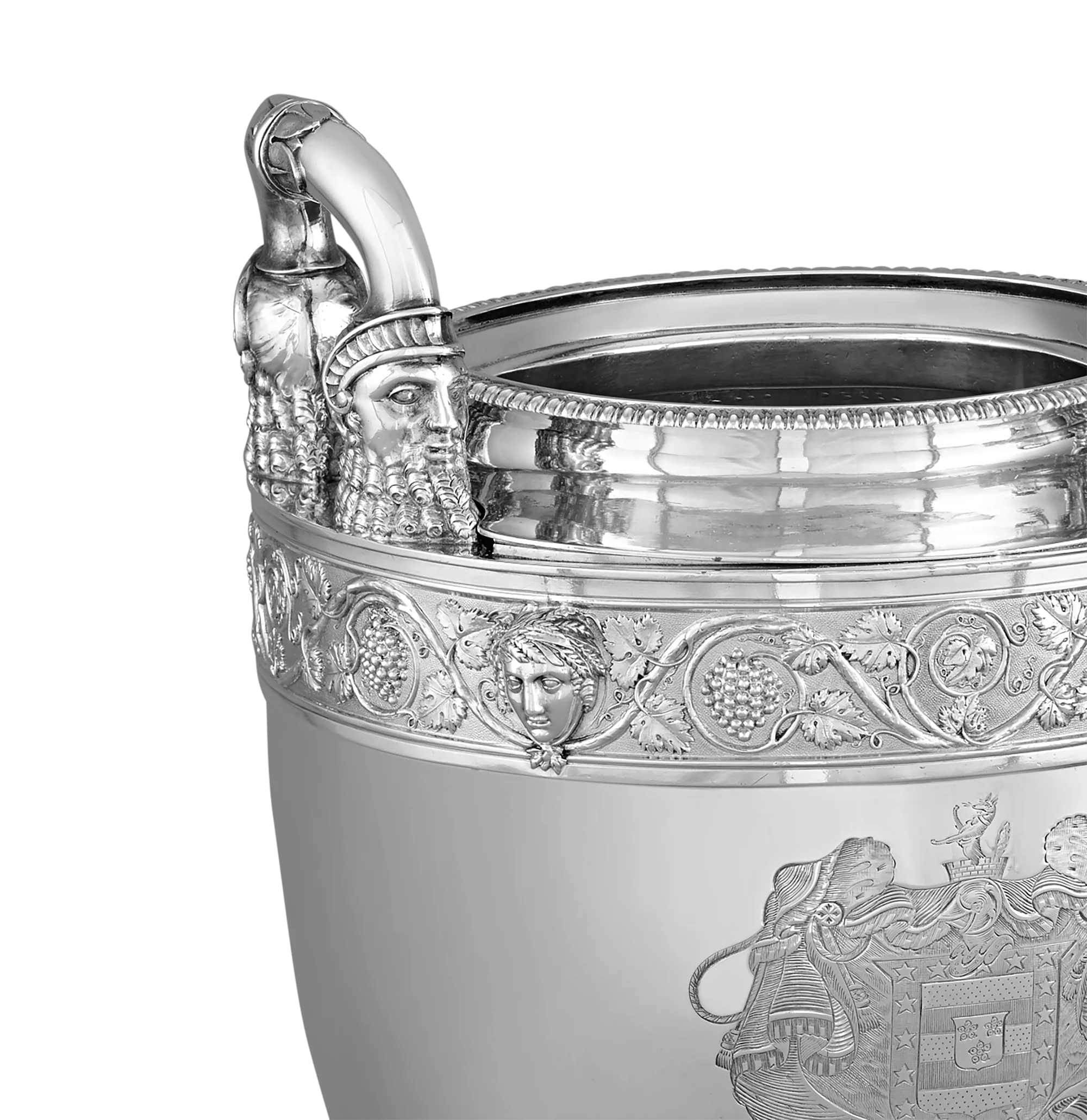
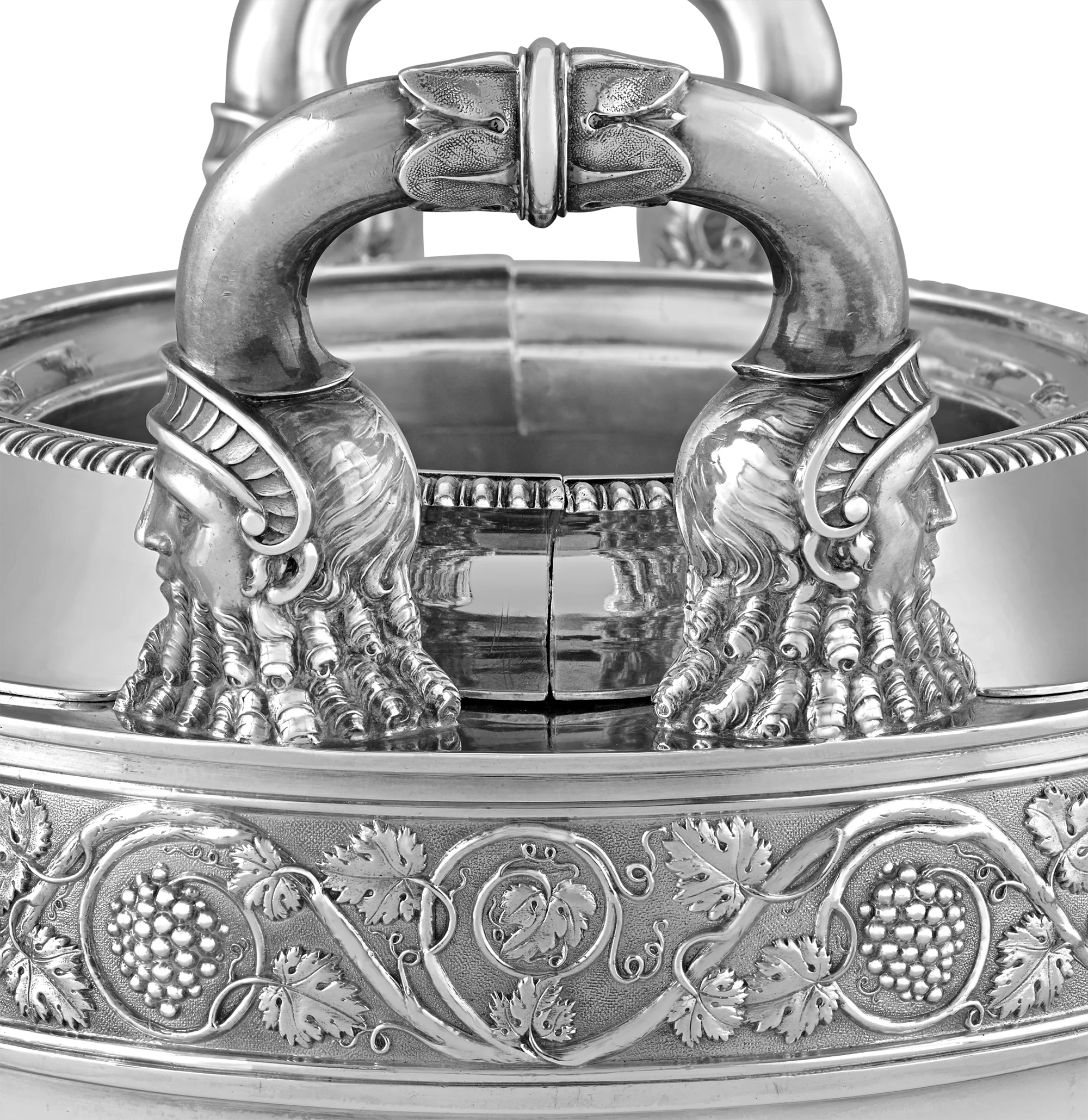
Each cooler is a study in refinement and proportion. The fluted lower body rises from a circular gadrooned foot, surmounted by a continuous frieze of vine and mask ornament in crisp relief. The handles terminate in finely modeled Assyrian heads, a favorite motif of the Regency aesthetic, while the engraved armorials suggest a distinguished noble provenance. The balance of sculptural form and linear precision reflects the disciplined artistry that made Rundell’s silver synonymous with regal taste.
Rundell, Bridge & Rundell defined luxury in Georgian England, supplying silver masterpieces to the royal household and to sovereigns across Europe. Their workshop employed the finest silversmiths of the age—Scott, Smith and Storr among them—who advanced the decorative arts through both technical innovation and classical inspiration. Today, comparable, though singular, examples reside in the Victoria and Albert Museum, the Metropolitan Museum of Art and the Virginia Museum of Fine Arts.
Each: 12” high × 8” wide × 7 3/4” deep
Digby Scott and Benjamin Smith for Rundell, Bridge & Rundell
Hallmarked London, 1806
This magnificent set of four sterling silver wine coolers represents the height of Regency-era silver design and craftsmanship. Hallmarked London, 1806, they were produced by the royal silversmiths Rundell, Bridge & Rundell—official goldsmiths to King George III and the Prince Regent. Made by Digby Scott and Benjamin Smith, these vessels embody the firm’s unparalleled mastery in the Neoclassical idiom and the grandeur of early 19th-century English silver.
The coolers’ impressive combined weight of 391 troy ounces points to the opulence of a commission reserved for the aristocracy. In Georgian society, wine coolers were the ultimate expression of refinement. Ice itself was a luxury, and silver of this caliber could be commissioned only by the elite. These coolers would have cost nearly $1,000 in 1806, when a laborer earned only about the equivalent of $73 a year.
Each cooler is a study in refinement and proportion. The fluted lower body rises from a circular gadrooned foot, surmounted by a continuous frieze of vine and mask ornament in crisp relief. The handles terminate in finely modeled Assyrian heads, a favorite motif of the Regency aesthetic, while the engraved armorials suggest a distinguished noble provenance. The balance of sculptural form and linear precision reflects the disciplined artistry that made Rundell’s silver synonymous with regal taste.
Rundell, Bridge & Rundell defined luxury in Georgian England, supplying silver masterpieces to the royal household and to sovereigns across Europe. Their workshop employed the finest silversmiths of the age—Scott, Smith and Storr among them—who advanced the decorative arts through both technical innovation and classical inspiration. Today, comparable, though singular, examples reside in the Victoria and Albert Museum, the Metropolitan Museum of Art and the Virginia Museum of Fine Arts.
Each: 12” high × 8” wide × 7 3/4” deep
$51,975.00
Original: $148,500.00
-65%Set of Four George III Silver Wine Coolers by Rundell, Bridge & Rundell—
$148,500.00
$51,975.00Product Information
Product Information
Shipping & Returns
Shipping & Returns
Description
Set of Four George III Silver Wine Coolers
Digby Scott and Benjamin Smith for Rundell, Bridge & Rundell
Hallmarked London, 1806
This magnificent set of four sterling silver wine coolers represents the height of Regency-era silver design and craftsmanship. Hallmarked London, 1806, they were produced by the royal silversmiths Rundell, Bridge & Rundell—official goldsmiths to King George III and the Prince Regent. Made by Digby Scott and Benjamin Smith, these vessels embody the firm’s unparalleled mastery in the Neoclassical idiom and the grandeur of early 19th-century English silver.
The coolers’ impressive combined weight of 391 troy ounces points to the opulence of a commission reserved for the aristocracy. In Georgian society, wine coolers were the ultimate expression of refinement. Ice itself was a luxury, and silver of this caliber could be commissioned only by the elite. These coolers would have cost nearly $1,000 in 1806, when a laborer earned only about the equivalent of $73 a year.
Each cooler is a study in refinement and proportion. The fluted lower body rises from a circular gadrooned foot, surmounted by a continuous frieze of vine and mask ornament in crisp relief. The handles terminate in finely modeled Assyrian heads, a favorite motif of the Regency aesthetic, while the engraved armorials suggest a distinguished noble provenance. The balance of sculptural form and linear precision reflects the disciplined artistry that made Rundell’s silver synonymous with regal taste.
Rundell, Bridge & Rundell defined luxury in Georgian England, supplying silver masterpieces to the royal household and to sovereigns across Europe. Their workshop employed the finest silversmiths of the age—Scott, Smith and Storr among them—who advanced the decorative arts through both technical innovation and classical inspiration. Today, comparable, though singular, examples reside in the Victoria and Albert Museum, the Metropolitan Museum of Art and the Virginia Museum of Fine Arts.
Each: 12” high × 8” wide × 7 3/4” deep
Digby Scott and Benjamin Smith for Rundell, Bridge & Rundell
Hallmarked London, 1806
This magnificent set of four sterling silver wine coolers represents the height of Regency-era silver design and craftsmanship. Hallmarked London, 1806, they were produced by the royal silversmiths Rundell, Bridge & Rundell—official goldsmiths to King George III and the Prince Regent. Made by Digby Scott and Benjamin Smith, these vessels embody the firm’s unparalleled mastery in the Neoclassical idiom and the grandeur of early 19th-century English silver.
The coolers’ impressive combined weight of 391 troy ounces points to the opulence of a commission reserved for the aristocracy. In Georgian society, wine coolers were the ultimate expression of refinement. Ice itself was a luxury, and silver of this caliber could be commissioned only by the elite. These coolers would have cost nearly $1,000 in 1806, when a laborer earned only about the equivalent of $73 a year.
Each cooler is a study in refinement and proportion. The fluted lower body rises from a circular gadrooned foot, surmounted by a continuous frieze of vine and mask ornament in crisp relief. The handles terminate in finely modeled Assyrian heads, a favorite motif of the Regency aesthetic, while the engraved armorials suggest a distinguished noble provenance. The balance of sculptural form and linear precision reflects the disciplined artistry that made Rundell’s silver synonymous with regal taste.
Rundell, Bridge & Rundell defined luxury in Georgian England, supplying silver masterpieces to the royal household and to sovereigns across Europe. Their workshop employed the finest silversmiths of the age—Scott, Smith and Storr among them—who advanced the decorative arts through both technical innovation and classical inspiration. Today, comparable, though singular, examples reside in the Victoria and Albert Museum, the Metropolitan Museum of Art and the Virginia Museum of Fine Arts.
Each: 12” high × 8” wide × 7 3/4” deep