🚚 Free Worldwide Shipping on All Orders!Shop Now



Mashallah! by Carl Haag
Carl Haag
1820–1915 | German
Mashallah!
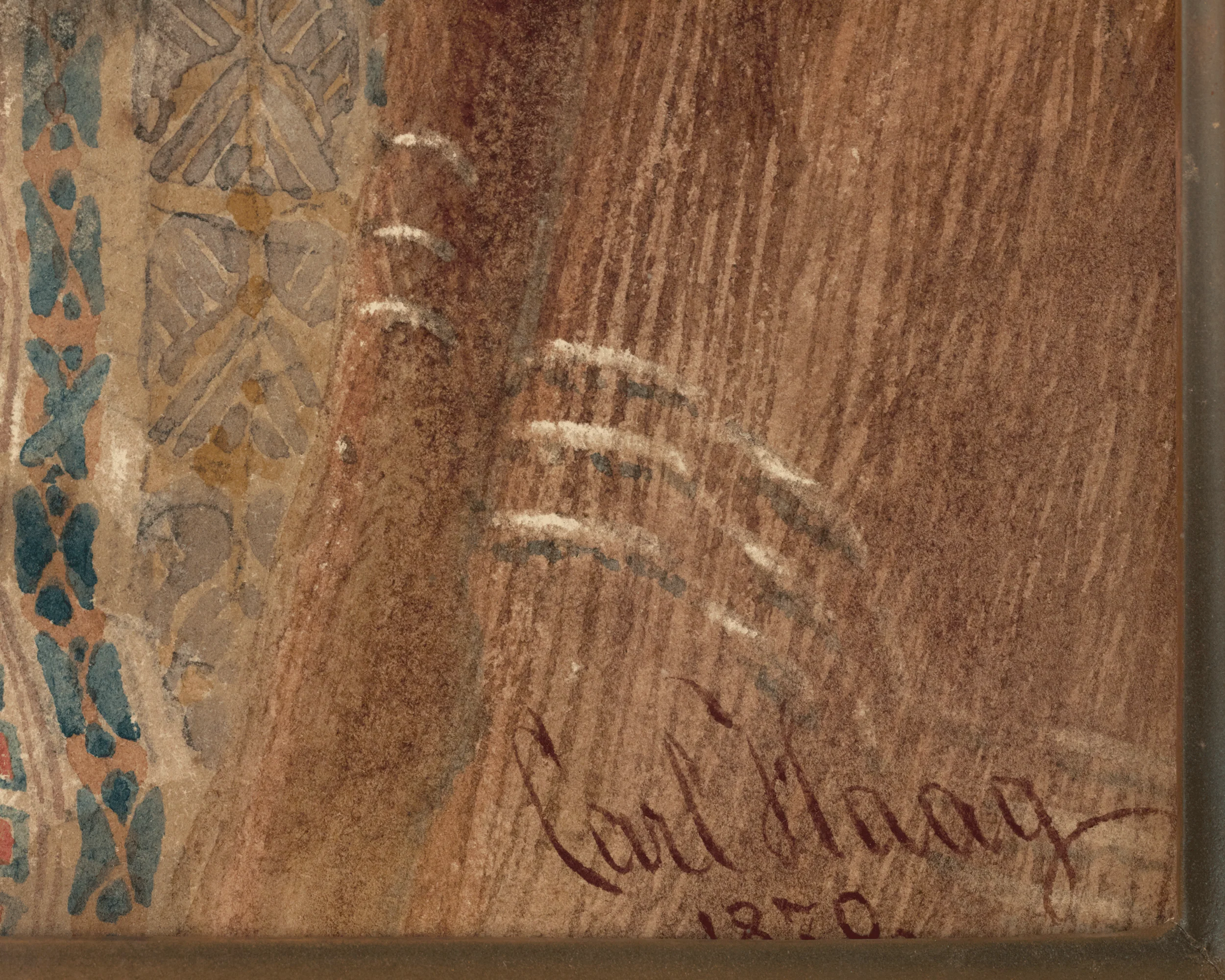
Signed and dated “Carl Haag / 1870” (lower right)
Titled and signed “Mash: Allah! / by Carl Haag” (en verso)
Watercolor heightened with white
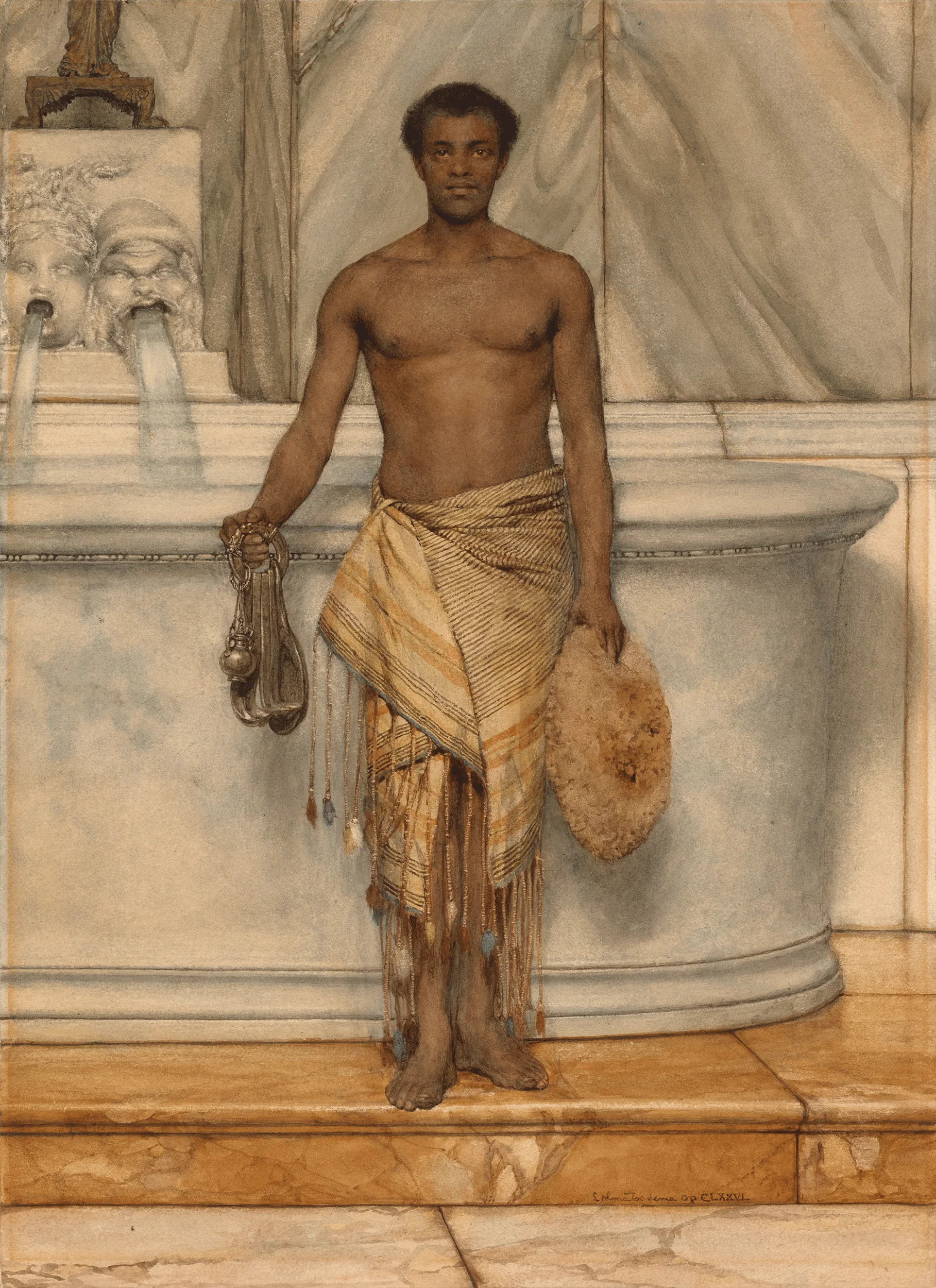
A commanding and highly evocative work, Mashallah! stands as an exceptional example of Carl Haag’s Orientalist production. Executed in 1870, shortly after the artist’s extensive travels through the Middle East, this large-scale watercolor reflects Haag’s firsthand engagement with the region and his remarkable ability to translate lived experience into images of enduring visual power. Rich in atmosphere and cultural resonance, the work captures the contemplative dignity that defines Haag’s finest portraits.
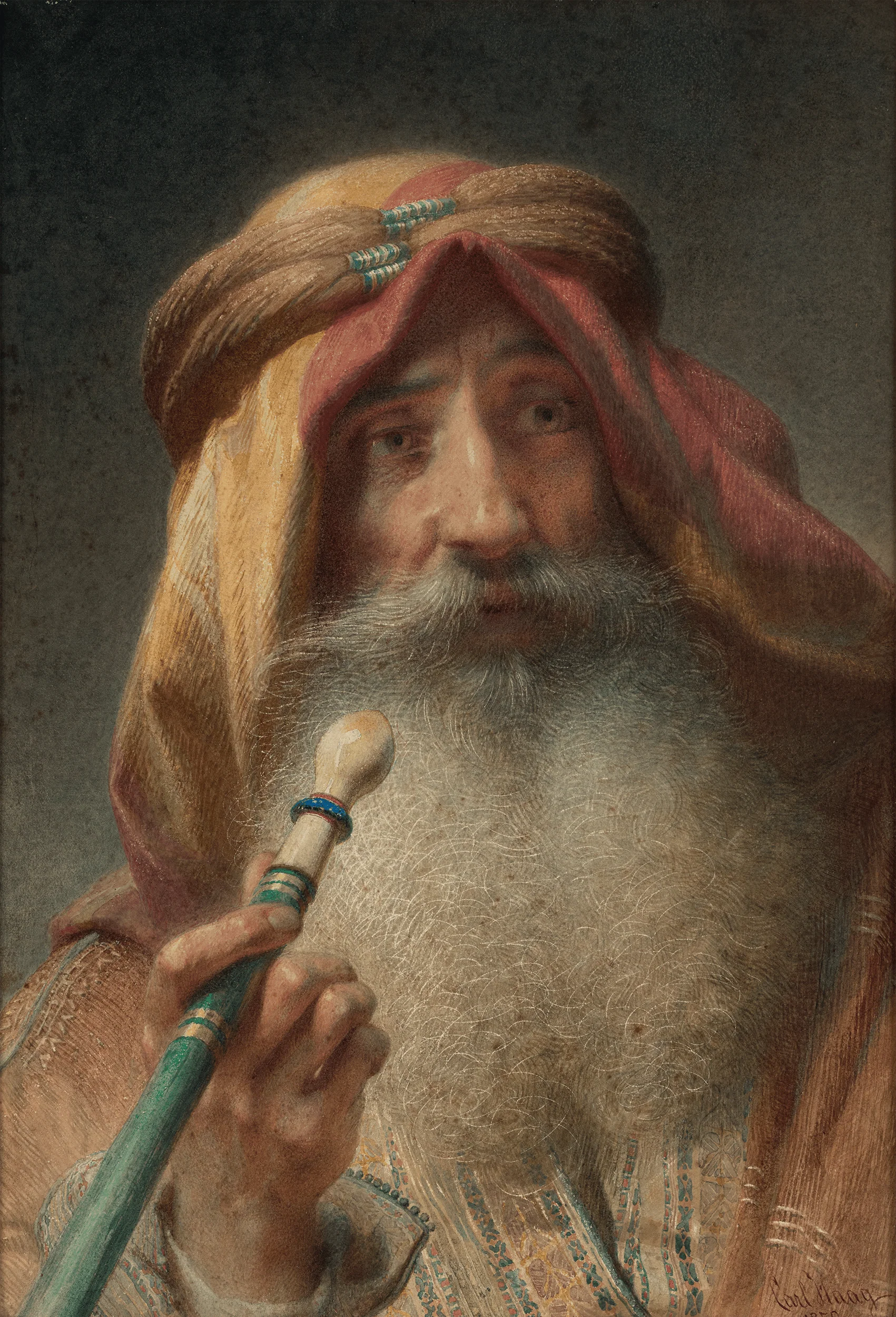
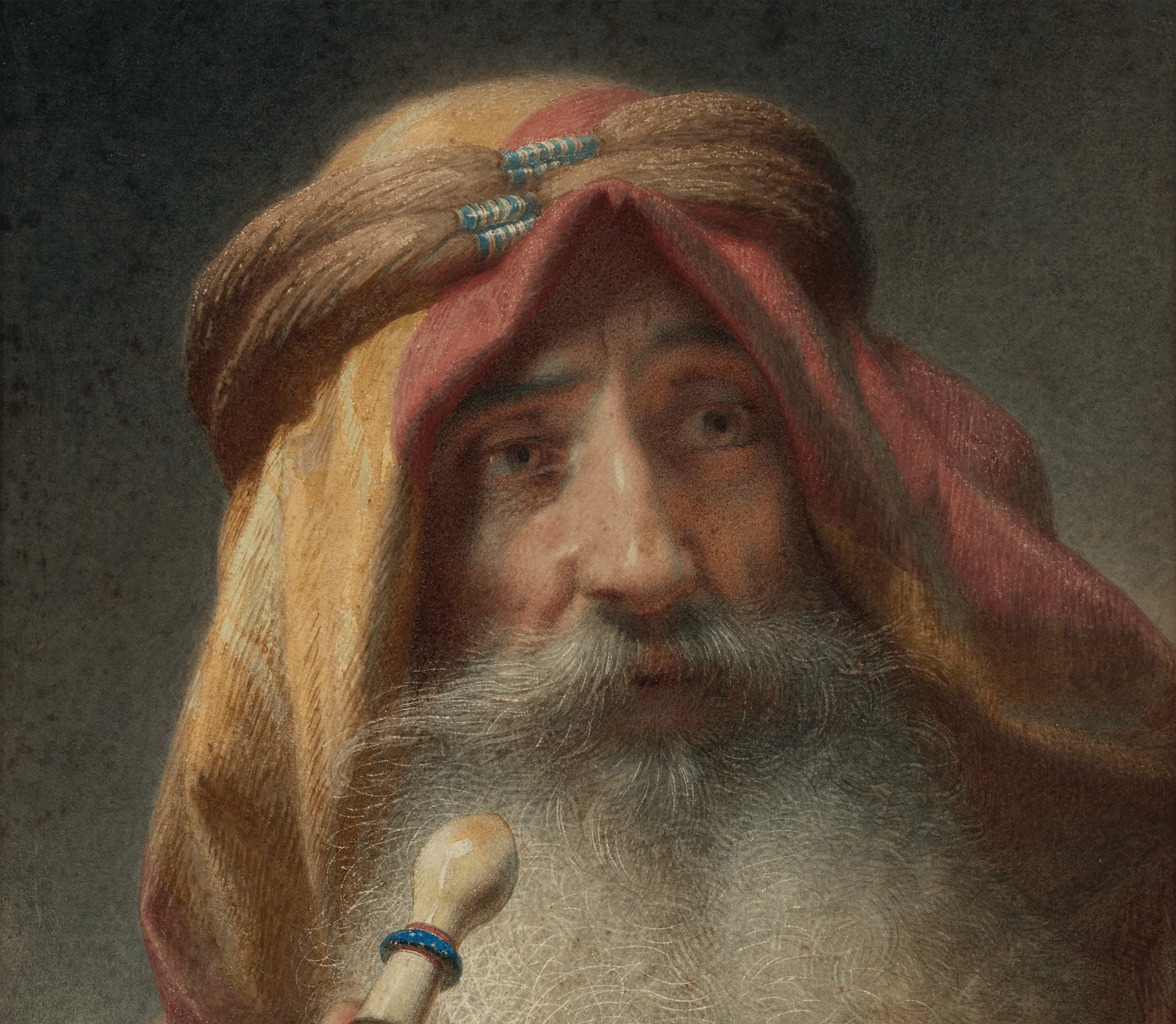
The composition centers on a male figure dressed in traditional Middle Eastern attire, rendered with striking presence. His calm expression and distant gaze convey introspection, while the soft modeling of the face demonstrates Haag’s refined understanding of anatomy and character. A vivid green hookah held delicately in his hand introduces a moment of chromatic contrast against the muted earth tones of the palette. Heightened with white and subtly scratched to create texture, the surface shimmers with delicate detail.
Carl Haag was among the most accomplished Orientalist painters of the 19th century and remains celebrated for his meticulous draftsmanship and mastery of watercolor technique. Bavarian-born and later naturalized as a British subject, Haag trained in Nuremberg and Munich before settling in England in 1847. His election to the Royal Society of Painters in Water Colours—first as an Associate in 1850 and then as a full member in 1853—confirmed his standing among Britain’s artistic elite, a reputation reinforced by his patronage from Queen Victoria. Between 1858 and 1860, Haag undertook extended journeys through Egypt, Jerusalem, Lebanon and Syria, often working directly from life. These travels fundamentally shaped his oeuvre, grounding his Orientalist imagery in direct observation rather than romantic invention.
The title Mashallah!—an Arabic expression meaning “God has willed it,” is commonly used to express admiration, reverence or gratitude. Works of this scale and quality are among Haag’s most sought-after compositions, prized for their authenticity, technical finesse and poetic restraint.
Painted 1870
Paper: 19 5/8" high x 13 5/8" wide (49.85 x 34.61 cm)
Frame: 35 1/2" high x 27 1/2" wide x 2 1/2" deep (90.17 x 69.85 x 6.35 cm)
Provenance:
Private Collection, London
M.S. Rau, New Orleans
1820–1915 | German
Mashallah!
Signed and dated “Carl Haag / 1870” (lower right)
Titled and signed “Mash: Allah! / by Carl Haag” (en verso)
Watercolor heightened with white
A commanding and highly evocative work, Mashallah! stands as an exceptional example of Carl Haag’s Orientalist production. Executed in 1870, shortly after the artist’s extensive travels through the Middle East, this large-scale watercolor reflects Haag’s firsthand engagement with the region and his remarkable ability to translate lived experience into images of enduring visual power. Rich in atmosphere and cultural resonance, the work captures the contemplative dignity that defines Haag’s finest portraits.
The composition centers on a male figure dressed in traditional Middle Eastern attire, rendered with striking presence. His calm expression and distant gaze convey introspection, while the soft modeling of the face demonstrates Haag’s refined understanding of anatomy and character. A vivid green hookah held delicately in his hand introduces a moment of chromatic contrast against the muted earth tones of the palette. Heightened with white and subtly scratched to create texture, the surface shimmers with delicate detail.
Carl Haag was among the most accomplished Orientalist painters of the 19th century and remains celebrated for his meticulous draftsmanship and mastery of watercolor technique. Bavarian-born and later naturalized as a British subject, Haag trained in Nuremberg and Munich before settling in England in 1847. His election to the Royal Society of Painters in Water Colours—first as an Associate in 1850 and then as a full member in 1853—confirmed his standing among Britain’s artistic elite, a reputation reinforced by his patronage from Queen Victoria. Between 1858 and 1860, Haag undertook extended journeys through Egypt, Jerusalem, Lebanon and Syria, often working directly from life. These travels fundamentally shaped his oeuvre, grounding his Orientalist imagery in direct observation rather than romantic invention.
The title Mashallah!—an Arabic expression meaning “God has willed it,” is commonly used to express admiration, reverence or gratitude. Works of this scale and quality are among Haag’s most sought-after compositions, prized for their authenticity, technical finesse and poetic restraint.
Painted 1870
Paper: 19 5/8" high x 13 5/8" wide (49.85 x 34.61 cm)
Frame: 35 1/2" high x 27 1/2" wide x 2 1/2" deep (90.17 x 69.85 x 6.35 cm)
Provenance:
Private Collection, London
M.S. Rau, New Orleans
$44,500.00
Mashallah! by Carl Haag—
$44,500.00
Product Information
Product Information
Shipping & Returns
Shipping & Returns
Description
Carl Haag
1820–1915 | German
Mashallah!
Signed and dated “Carl Haag / 1870” (lower right)
Titled and signed “Mash: Allah! / by Carl Haag” (en verso)
Watercolor heightened with white
A commanding and highly evocative work, Mashallah! stands as an exceptional example of Carl Haag’s Orientalist production. Executed in 1870, shortly after the artist’s extensive travels through the Middle East, this large-scale watercolor reflects Haag’s firsthand engagement with the region and his remarkable ability to translate lived experience into images of enduring visual power. Rich in atmosphere and cultural resonance, the work captures the contemplative dignity that defines Haag’s finest portraits.
The composition centers on a male figure dressed in traditional Middle Eastern attire, rendered with striking presence. His calm expression and distant gaze convey introspection, while the soft modeling of the face demonstrates Haag’s refined understanding of anatomy and character. A vivid green hookah held delicately in his hand introduces a moment of chromatic contrast against the muted earth tones of the palette. Heightened with white and subtly scratched to create texture, the surface shimmers with delicate detail.
Carl Haag was among the most accomplished Orientalist painters of the 19th century and remains celebrated for his meticulous draftsmanship and mastery of watercolor technique. Bavarian-born and later naturalized as a British subject, Haag trained in Nuremberg and Munich before settling in England in 1847. His election to the Royal Society of Painters in Water Colours—first as an Associate in 1850 and then as a full member in 1853—confirmed his standing among Britain’s artistic elite, a reputation reinforced by his patronage from Queen Victoria. Between 1858 and 1860, Haag undertook extended journeys through Egypt, Jerusalem, Lebanon and Syria, often working directly from life. These travels fundamentally shaped his oeuvre, grounding his Orientalist imagery in direct observation rather than romantic invention.
The title Mashallah!—an Arabic expression meaning “God has willed it,” is commonly used to express admiration, reverence or gratitude. Works of this scale and quality are among Haag’s most sought-after compositions, prized for their authenticity, technical finesse and poetic restraint.
Painted 1870
Paper: 19 5/8" high x 13 5/8" wide (49.85 x 34.61 cm)
Frame: 35 1/2" high x 27 1/2" wide x 2 1/2" deep (90.17 x 69.85 x 6.35 cm)
Provenance:
Private Collection, London
M.S. Rau, New Orleans
1820–1915 | German
Mashallah!
Signed and dated “Carl Haag / 1870” (lower right)
Titled and signed “Mash: Allah! / by Carl Haag” (en verso)
Watercolor heightened with white
A commanding and highly evocative work, Mashallah! stands as an exceptional example of Carl Haag’s Orientalist production. Executed in 1870, shortly after the artist’s extensive travels through the Middle East, this large-scale watercolor reflects Haag’s firsthand engagement with the region and his remarkable ability to translate lived experience into images of enduring visual power. Rich in atmosphere and cultural resonance, the work captures the contemplative dignity that defines Haag’s finest portraits.
The composition centers on a male figure dressed in traditional Middle Eastern attire, rendered with striking presence. His calm expression and distant gaze convey introspection, while the soft modeling of the face demonstrates Haag’s refined understanding of anatomy and character. A vivid green hookah held delicately in his hand introduces a moment of chromatic contrast against the muted earth tones of the palette. Heightened with white and subtly scratched to create texture, the surface shimmers with delicate detail.
Carl Haag was among the most accomplished Orientalist painters of the 19th century and remains celebrated for his meticulous draftsmanship and mastery of watercolor technique. Bavarian-born and later naturalized as a British subject, Haag trained in Nuremberg and Munich before settling in England in 1847. His election to the Royal Society of Painters in Water Colours—first as an Associate in 1850 and then as a full member in 1853—confirmed his standing among Britain’s artistic elite, a reputation reinforced by his patronage from Queen Victoria. Between 1858 and 1860, Haag undertook extended journeys through Egypt, Jerusalem, Lebanon and Syria, often working directly from life. These travels fundamentally shaped his oeuvre, grounding his Orientalist imagery in direct observation rather than romantic invention.
The title Mashallah!—an Arabic expression meaning “God has willed it,” is commonly used to express admiration, reverence or gratitude. Works of this scale and quality are among Haag’s most sought-after compositions, prized for their authenticity, technical finesse and poetic restraint.
Painted 1870
Paper: 19 5/8" high x 13 5/8" wide (49.85 x 34.61 cm)
Frame: 35 1/2" high x 27 1/2" wide x 2 1/2" deep (90.17 x 69.85 x 6.35 cm)
Provenance:
Private Collection, London
M.S. Rau, New Orleans