🚚 Free Worldwide Shipping on All Orders!Shop Now

Gold Lacquer Incense Box
A Gold Lacquer Kōbako (Incense Box)
Edo Period (1615–1868), Circa 1850
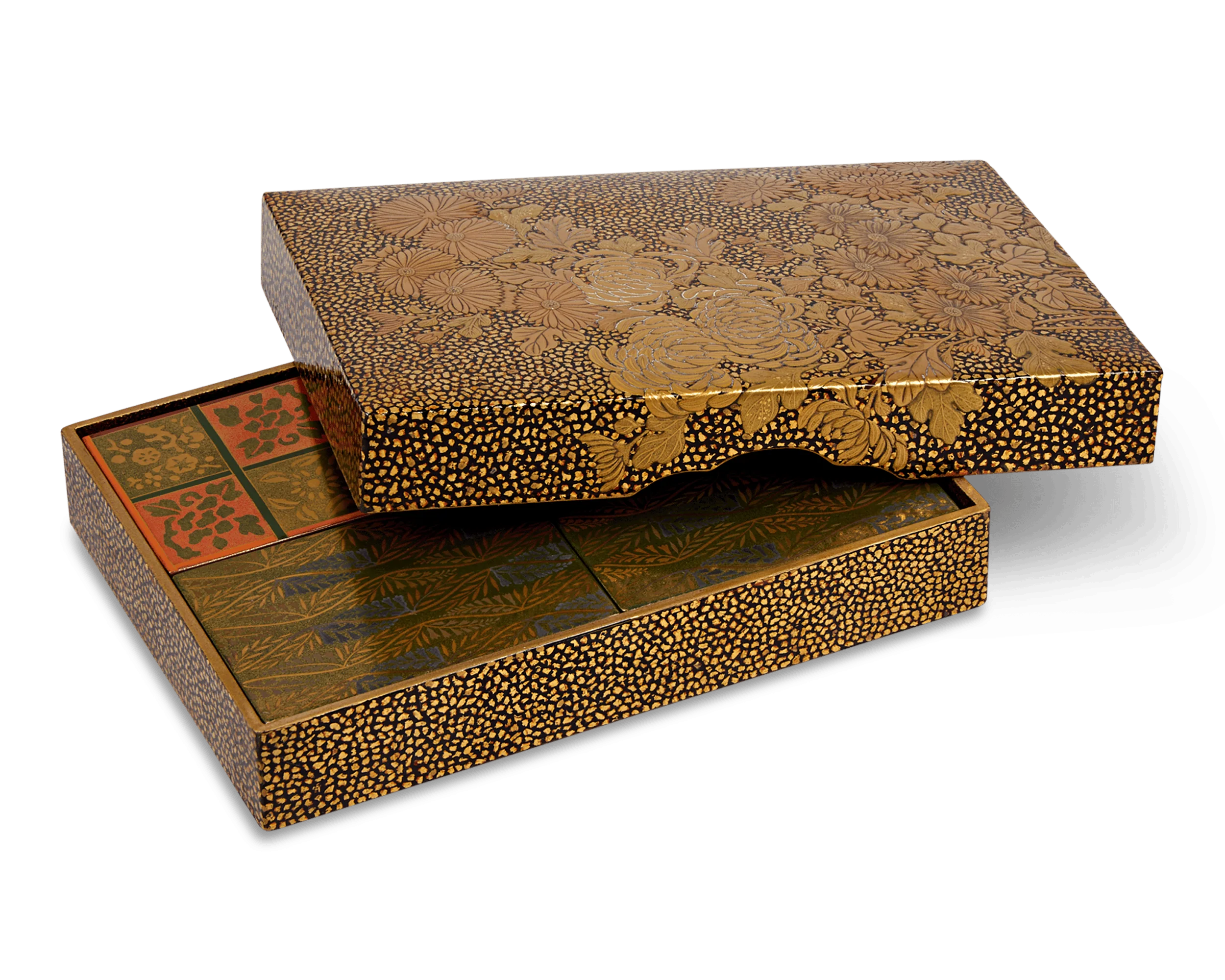
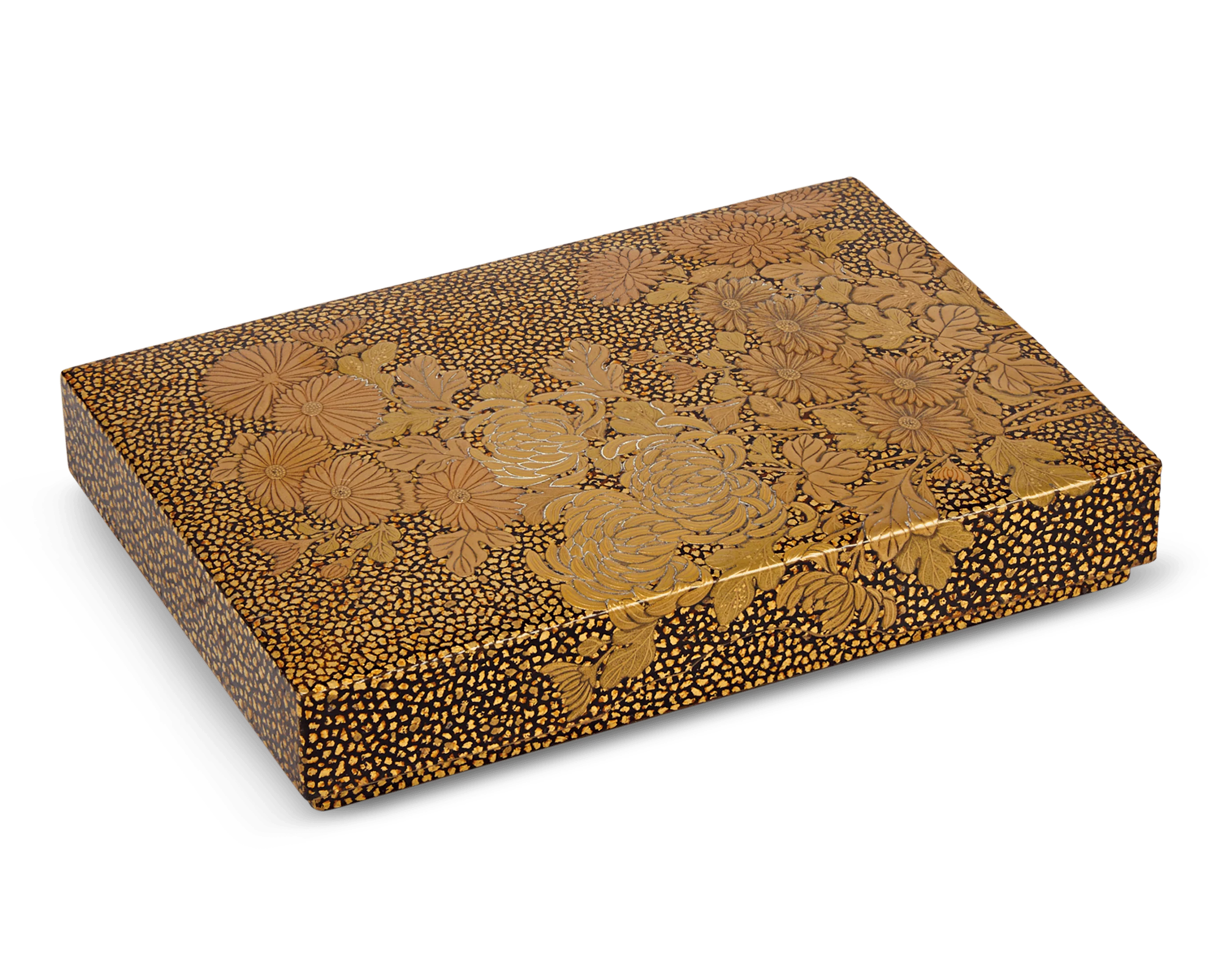
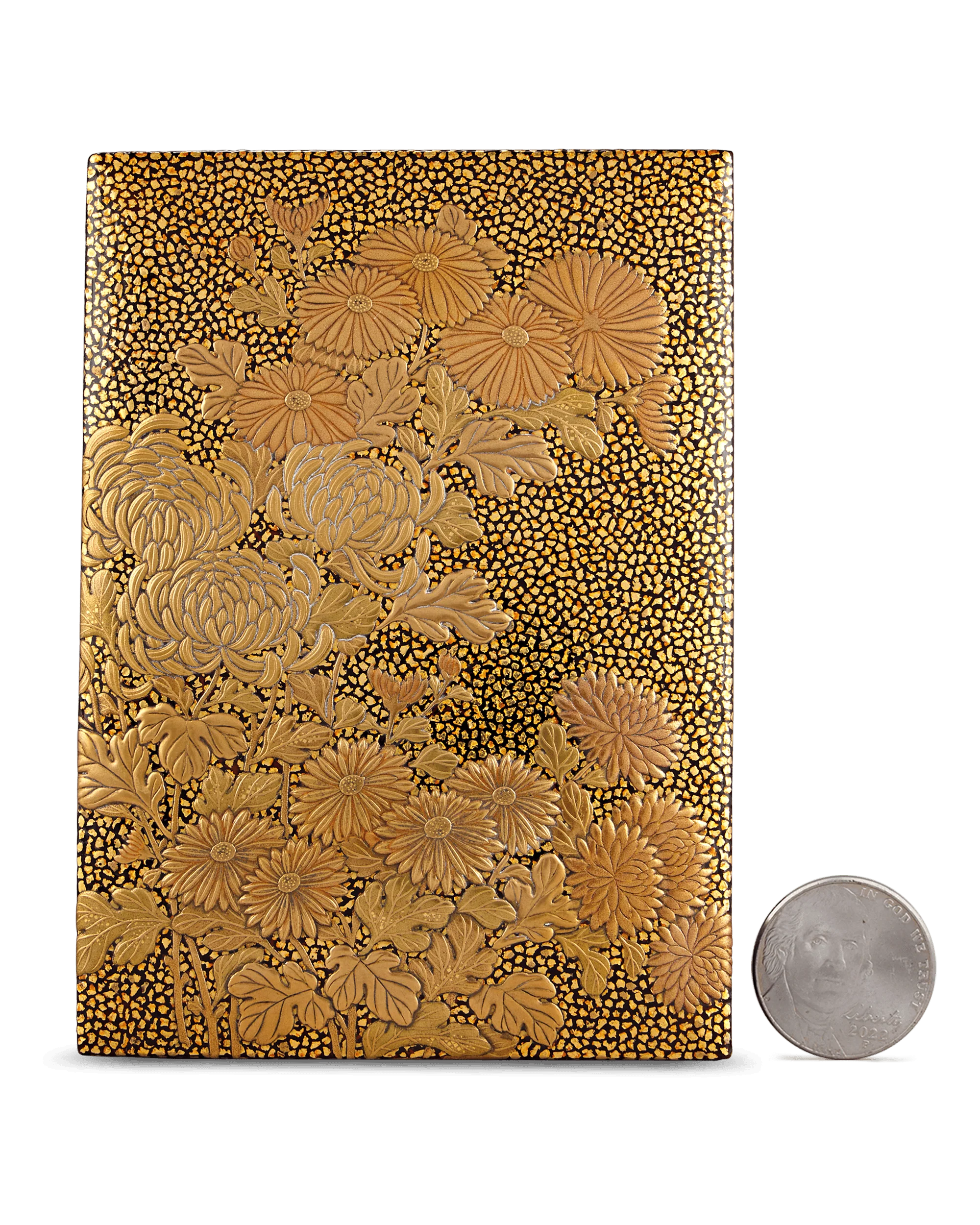
This exquisite gold lacquer kōbako (incense box) exemplifies the refined craftsmanship of the Edo period. The cover is adorned with chrysanthemums in various shades of gold, set against an okihirame ground—a technique characterized by sprinkled gold leaf fragments, creating a textured and shimmering surface.
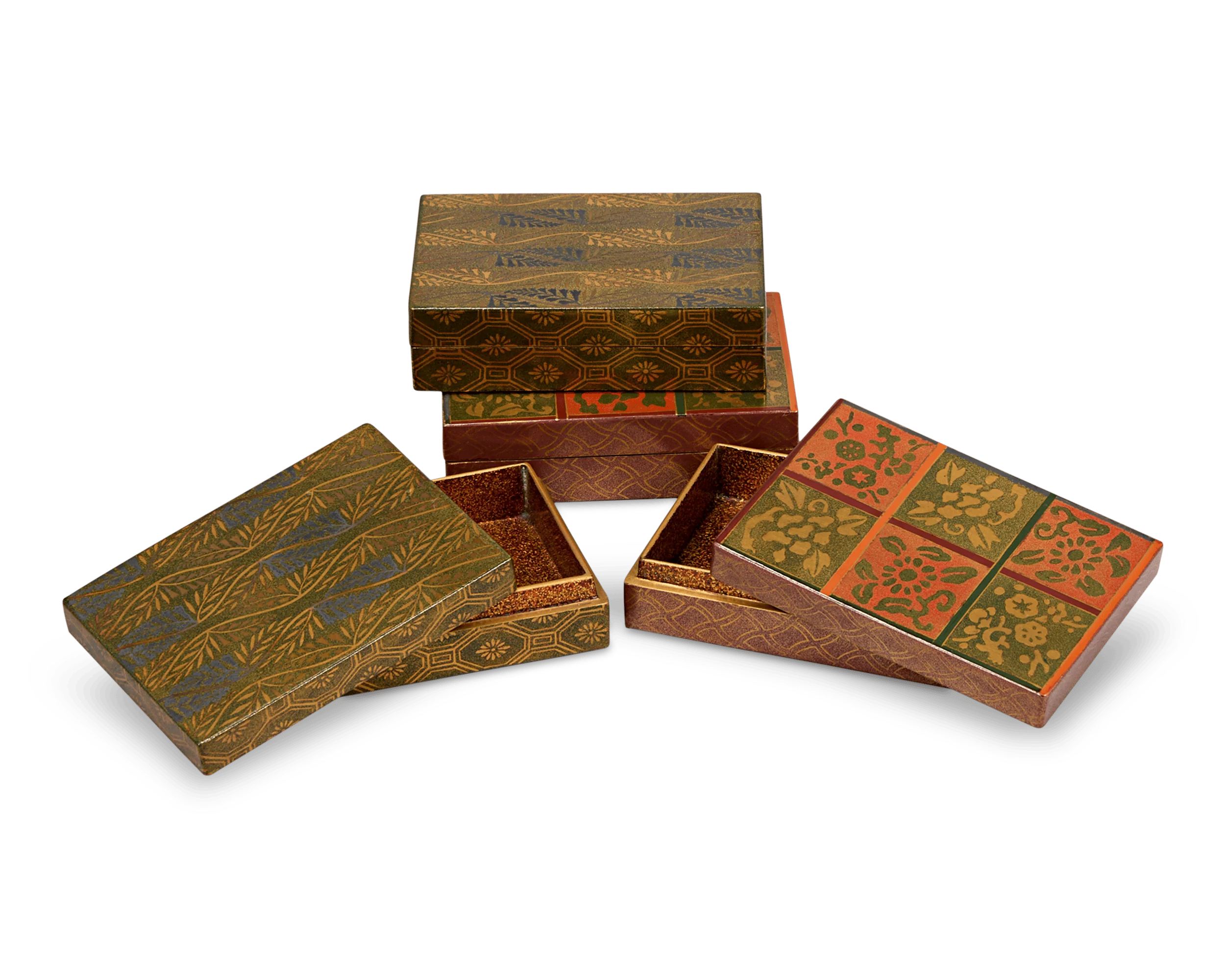
Inside, the box contains four original rectangular compartments, traditionally used to hold incense. These inner boxes are meticulously decorated in gold, silver and red togidashi-maki-e, showcasing intricate floral and foliate motifs. The interior is finished with nashiji, a delicate sprinkling of gold and silver powder that produces a subtle, glimmering effect.
In Japanese culture, the burning of incense held deep ceremonial significance, much like the ritualistic preparation and sharing of tea. Incense appreciation (kōdō) was practiced among intimate gatherings, engaging the senses in a meditative and sacred ritual. The incense sticks would have been passed around carefully, often handled with chopsticks to preserve the purity of the materials.
4 1/8“ high x 3” deep x 3/4“ high
Edo Period (1615–1868), Circa 1850
This exquisite gold lacquer kōbako (incense box) exemplifies the refined craftsmanship of the Edo period. The cover is adorned with chrysanthemums in various shades of gold, set against an okihirame ground—a technique characterized by sprinkled gold leaf fragments, creating a textured and shimmering surface.
Inside, the box contains four original rectangular compartments, traditionally used to hold incense. These inner boxes are meticulously decorated in gold, silver and red togidashi-maki-e, showcasing intricate floral and foliate motifs. The interior is finished with nashiji, a delicate sprinkling of gold and silver powder that produces a subtle, glimmering effect.
In Japanese culture, the burning of incense held deep ceremonial significance, much like the ritualistic preparation and sharing of tea. Incense appreciation (kōdō) was practiced among intimate gatherings, engaging the senses in a meditative and sacred ritual. The incense sticks would have been passed around carefully, often handled with chopsticks to preserve the purity of the materials.
4 1/8“ high x 3” deep x 3/4“ high
$3,447.50
Original: $9,850.00
-65%Gold Lacquer Incense Box—
$9,850.00
$3,447.50Product Information
Product Information
Shipping & Returns
Shipping & Returns
Description
A Gold Lacquer Kōbako (Incense Box)
Edo Period (1615–1868), Circa 1850
This exquisite gold lacquer kōbako (incense box) exemplifies the refined craftsmanship of the Edo period. The cover is adorned with chrysanthemums in various shades of gold, set against an okihirame ground—a technique characterized by sprinkled gold leaf fragments, creating a textured and shimmering surface.
Inside, the box contains four original rectangular compartments, traditionally used to hold incense. These inner boxes are meticulously decorated in gold, silver and red togidashi-maki-e, showcasing intricate floral and foliate motifs. The interior is finished with nashiji, a delicate sprinkling of gold and silver powder that produces a subtle, glimmering effect.
In Japanese culture, the burning of incense held deep ceremonial significance, much like the ritualistic preparation and sharing of tea. Incense appreciation (kōdō) was practiced among intimate gatherings, engaging the senses in a meditative and sacred ritual. The incense sticks would have been passed around carefully, often handled with chopsticks to preserve the purity of the materials.
4 1/8“ high x 3” deep x 3/4“ high
Edo Period (1615–1868), Circa 1850
This exquisite gold lacquer kōbako (incense box) exemplifies the refined craftsmanship of the Edo period. The cover is adorned with chrysanthemums in various shades of gold, set against an okihirame ground—a technique characterized by sprinkled gold leaf fragments, creating a textured and shimmering surface.
Inside, the box contains four original rectangular compartments, traditionally used to hold incense. These inner boxes are meticulously decorated in gold, silver and red togidashi-maki-e, showcasing intricate floral and foliate motifs. The interior is finished with nashiji, a delicate sprinkling of gold and silver powder that produces a subtle, glimmering effect.
In Japanese culture, the burning of incense held deep ceremonial significance, much like the ritualistic preparation and sharing of tea. Incense appreciation (kōdō) was practiced among intimate gatherings, engaging the senses in a meditative and sacred ritual. The incense sticks would have been passed around carefully, often handled with chopsticks to preserve the purity of the materials.
4 1/8“ high x 3” deep x 3/4“ high