🚚 Free Worldwide Shipping on All Orders!Shop Now



Étude pour Les Sœurs Dolly by André Lhote
André Lhote
1885-1962 | French
Étude pour Les Sœurs Dolly
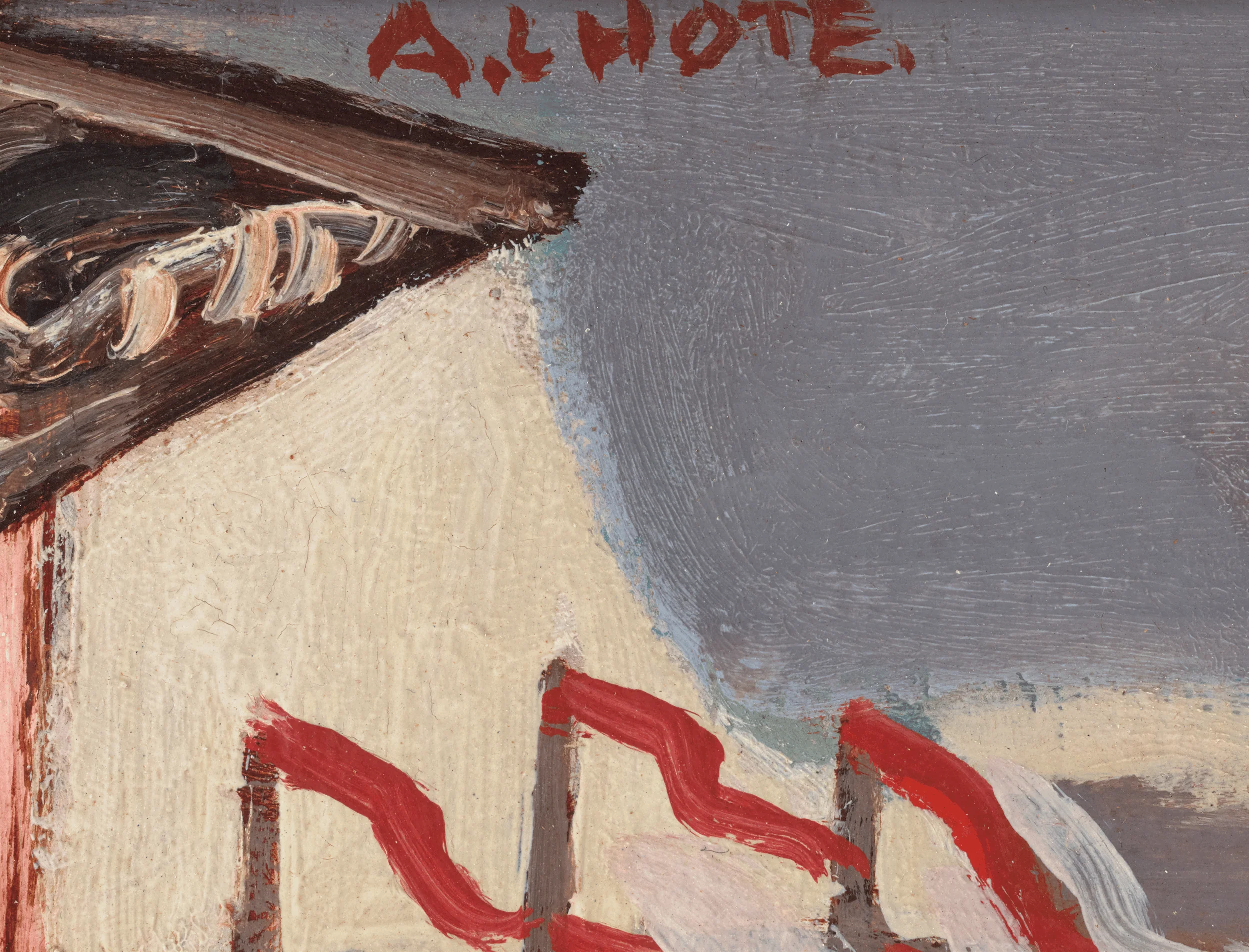
Signed "A. Lhote" (upper left) and stamped with the artist's label (en verso)
Oil on board
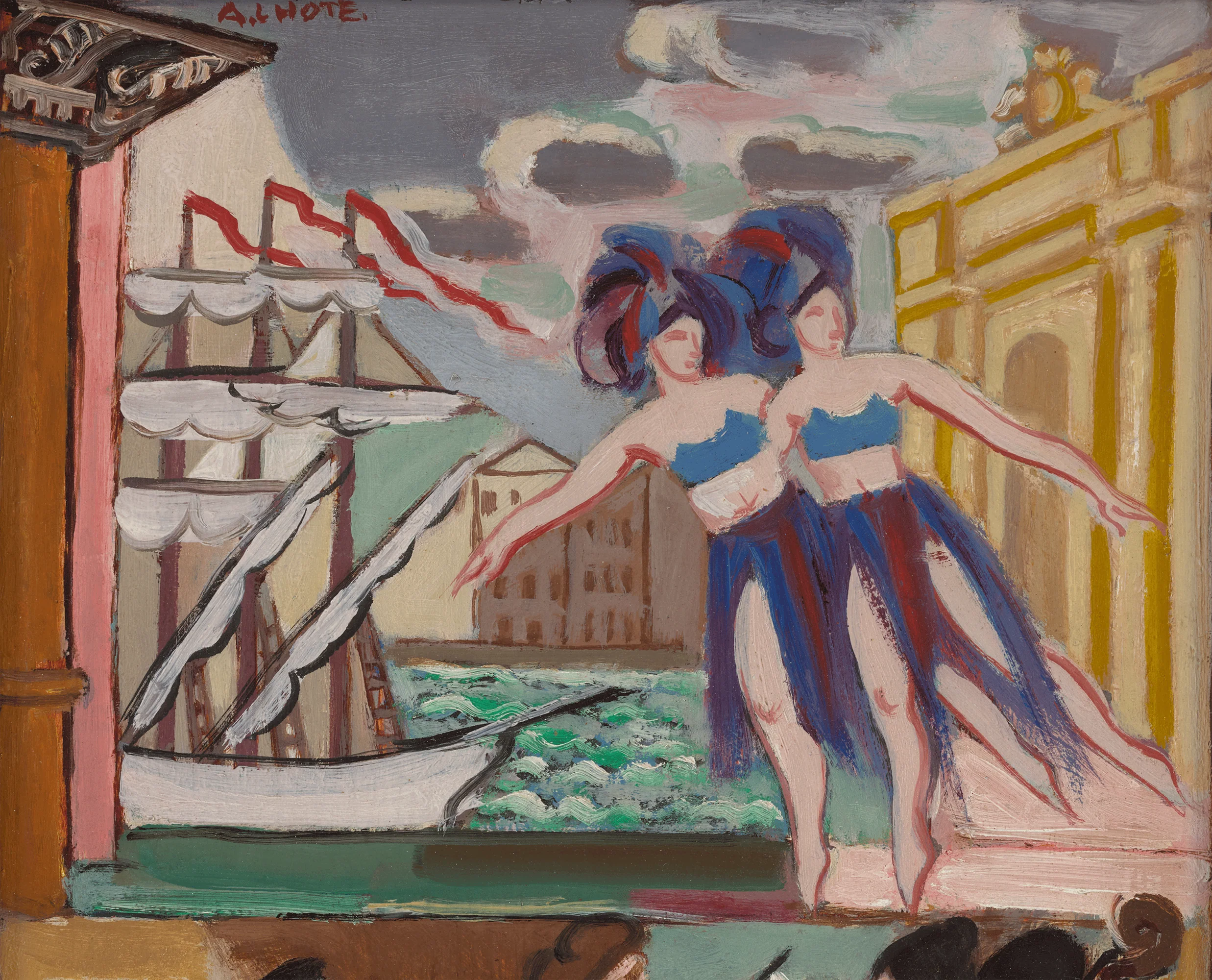
This dynamic painting by French artist André Lhote captures the spectacle of 1920s Parisian theater, merging his signature Cubist vision with the glamour of the Jazz Age. Lhote is celebrated for his important contributions to modern art, as he bridged the radical movements of Fauvism, Cubism and beyond.
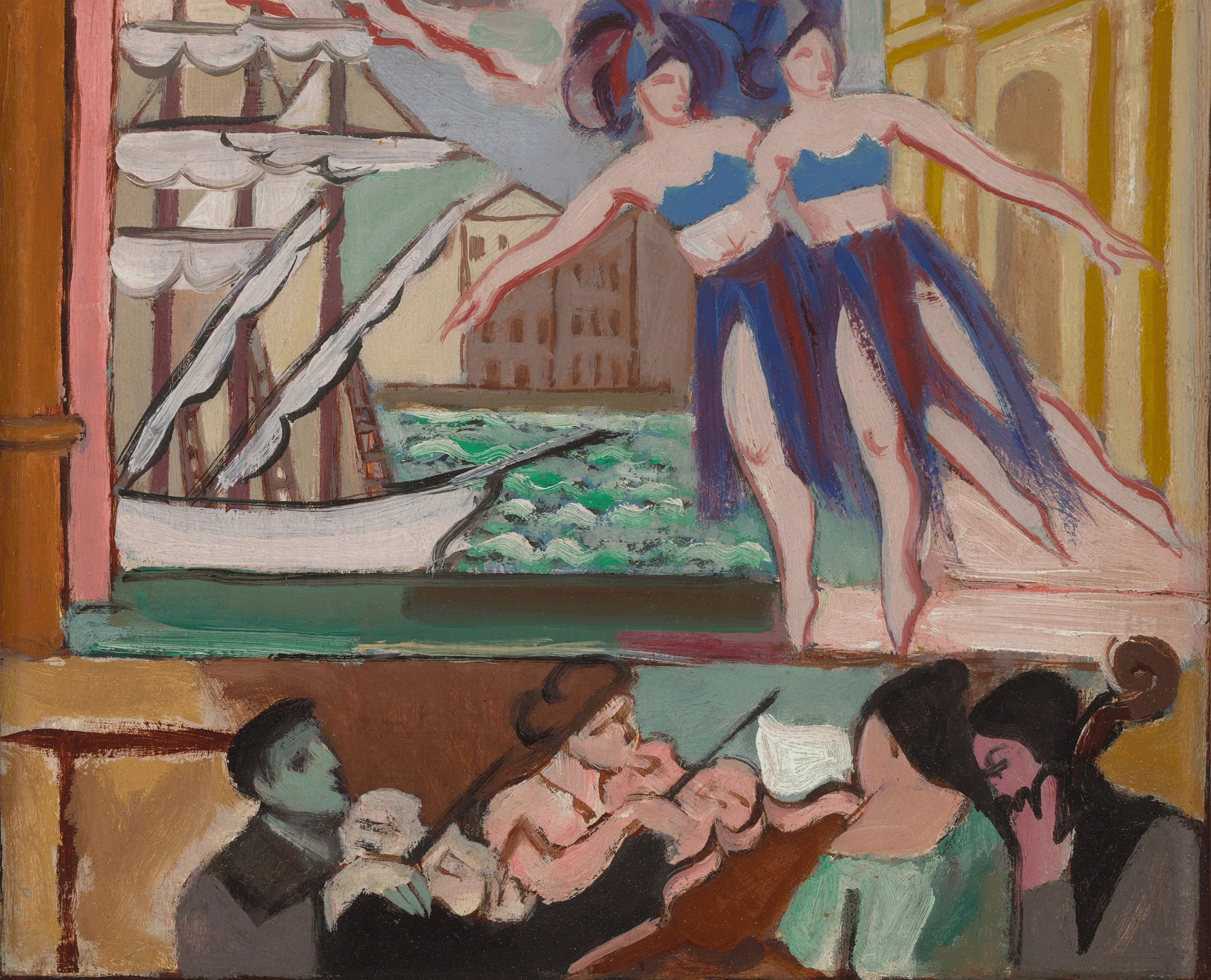
Serving as the foundation for his renowned painting, Les Sœurs Dolly (1925), this work captures the Dolly Sisters—Jenny and Rosie Dolly—who were two of the most famous entertainers in the Western world during the first decades of the 20th century. Here, the iconic twins glide across the stage in their dazzling costumes, accompanied by an elaborate backdrop and orchestra musicians. Lhote's trademark geometric style and rich palette bring a mesmerizing energy to the scene that perfectly embodies the spirit of the era.
Born Janka and Rózsika Deutsch in 1892, the Dolly Sisters immigrated to the United States as children, trained as dancers and rose to prominence through vaudeville and the Ziegfeld Follies. By 1922, they had relocated to Paris, where they headlined a series of spectacular revues at the city's most prestigious venues. In 1925, the year of this painting, the Dolly Sisters starred in Paris En Fleurs at the Casino de Paris, a lavish production that cemented their status as icons of the Parisian stage. Courted by royalty, showered with jewels by wealthy admirers and celebrated for their synchronized choreography and flawless mirrored beauty, the twins embodied the extravagance and modernity of the era.
Born in 1885 in Bordeaux, Lhote began as a student of sculpture, painting only occasionally in his free time. When he established his own studio in 1905, however, the artist took inspiration from Gauguin and Cézanne and dedicated himself fully to painting. A founding member of the influential Section d'Or group, he exhibited widely throughout Europe and authored influential texts on composition and modern aesthetics.
By the mid-1920s, Lhote was celebrated not only as a painter but as one of modernism's most influential theorists and teachers. In 1922, he founded his own school in Montparnasse, and his writings and lectures articulated a vision of modern art rooted in timeless principles of composition. His Paris courses attracted students from across Europe and the Americas, including Henri Cartier-Bresson and Tamara de Lempicka. His works are represented in major museum collections worldwide, including the Centre Pompidou, the Art Institute of Chicago and the San Francisco Museum of Modern Art.
The authenticity of this work has been confirmed by Dominique Bermann Martin, and it will be included in the forthcoming Catalogue raisonne de l'oeuvre peint d'Andre Lhote that is currently in preparation.
Circa 1925
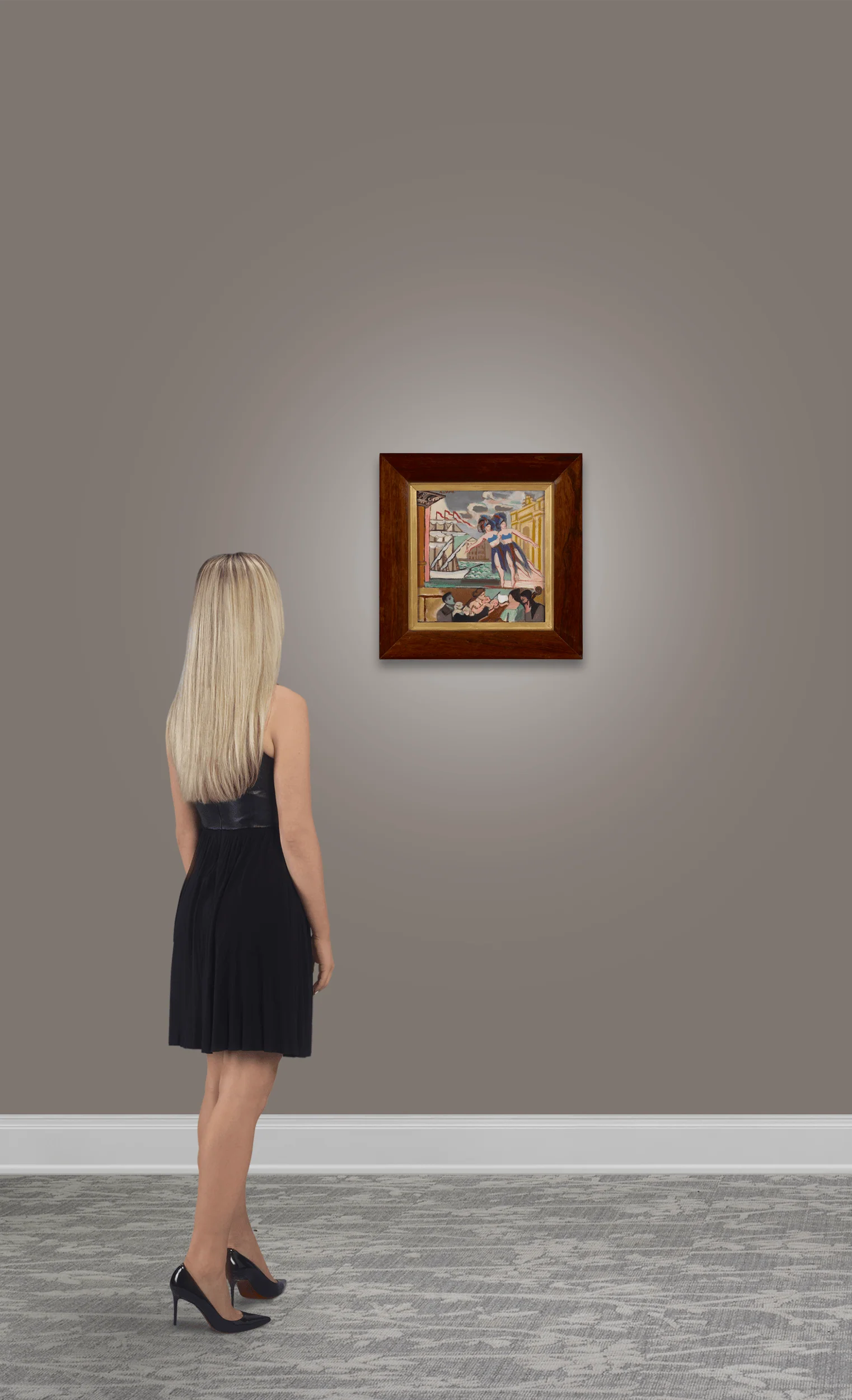
Board: 12 1/2” high x 12 1/8” wide (31.8 x 30.8 cm)
Frame: 19 1/2” high x 19 3/8” wide x 1 3/4” deep (49.5 x 49.1 x 4.5 cm)
Provenance:
Acquired directly from the artist
Thence by descent
M.S. Rau, New Orleans
1885-1962 | French
Étude pour Les Sœurs Dolly
Signed "A. Lhote" (upper left) and stamped with the artist's label (en verso)
Oil on board
This dynamic painting by French artist André Lhote captures the spectacle of 1920s Parisian theater, merging his signature Cubist vision with the glamour of the Jazz Age. Lhote is celebrated for his important contributions to modern art, as he bridged the radical movements of Fauvism, Cubism and beyond.
Serving as the foundation for his renowned painting, Les Sœurs Dolly (1925), this work captures the Dolly Sisters—Jenny and Rosie Dolly—who were two of the most famous entertainers in the Western world during the first decades of the 20th century. Here, the iconic twins glide across the stage in their dazzling costumes, accompanied by an elaborate backdrop and orchestra musicians. Lhote's trademark geometric style and rich palette bring a mesmerizing energy to the scene that perfectly embodies the spirit of the era.
Born Janka and Rózsika Deutsch in 1892, the Dolly Sisters immigrated to the United States as children, trained as dancers and rose to prominence through vaudeville and the Ziegfeld Follies. By 1922, they had relocated to Paris, where they headlined a series of spectacular revues at the city's most prestigious venues. In 1925, the year of this painting, the Dolly Sisters starred in Paris En Fleurs at the Casino de Paris, a lavish production that cemented their status as icons of the Parisian stage. Courted by royalty, showered with jewels by wealthy admirers and celebrated for their synchronized choreography and flawless mirrored beauty, the twins embodied the extravagance and modernity of the era.
Born in 1885 in Bordeaux, Lhote began as a student of sculpture, painting only occasionally in his free time. When he established his own studio in 1905, however, the artist took inspiration from Gauguin and Cézanne and dedicated himself fully to painting. A founding member of the influential Section d'Or group, he exhibited widely throughout Europe and authored influential texts on composition and modern aesthetics.
By the mid-1920s, Lhote was celebrated not only as a painter but as one of modernism's most influential theorists and teachers. In 1922, he founded his own school in Montparnasse, and his writings and lectures articulated a vision of modern art rooted in timeless principles of composition. His Paris courses attracted students from across Europe and the Americas, including Henri Cartier-Bresson and Tamara de Lempicka. His works are represented in major museum collections worldwide, including the Centre Pompidou, the Art Institute of Chicago and the San Francisco Museum of Modern Art.
The authenticity of this work has been confirmed by Dominique Bermann Martin, and it will be included in the forthcoming Catalogue raisonne de l'oeuvre peint d'Andre Lhote that is currently in preparation.
Circa 1925
Board: 12 1/2” high x 12 1/8” wide (31.8 x 30.8 cm)
Frame: 19 1/2” high x 19 3/8” wide x 1 3/4” deep (49.5 x 49.1 x 4.5 cm)
Provenance:
Acquired directly from the artist
Thence by descent
M.S. Rau, New Orleans
$30,975.00
Original: $88,500.00
-65%Étude pour Les Sœurs Dolly by André Lhote—
$88,500.00
$30,975.00Product Information
Product Information
Shipping & Returns
Shipping & Returns
Description
André Lhote
1885-1962 | French
Étude pour Les Sœurs Dolly
Signed "A. Lhote" (upper left) and stamped with the artist's label (en verso)
Oil on board
This dynamic painting by French artist André Lhote captures the spectacle of 1920s Parisian theater, merging his signature Cubist vision with the glamour of the Jazz Age. Lhote is celebrated for his important contributions to modern art, as he bridged the radical movements of Fauvism, Cubism and beyond.
Serving as the foundation for his renowned painting, Les Sœurs Dolly (1925), this work captures the Dolly Sisters—Jenny and Rosie Dolly—who were two of the most famous entertainers in the Western world during the first decades of the 20th century. Here, the iconic twins glide across the stage in their dazzling costumes, accompanied by an elaborate backdrop and orchestra musicians. Lhote's trademark geometric style and rich palette bring a mesmerizing energy to the scene that perfectly embodies the spirit of the era.
Born Janka and Rózsika Deutsch in 1892, the Dolly Sisters immigrated to the United States as children, trained as dancers and rose to prominence through vaudeville and the Ziegfeld Follies. By 1922, they had relocated to Paris, where they headlined a series of spectacular revues at the city's most prestigious venues. In 1925, the year of this painting, the Dolly Sisters starred in Paris En Fleurs at the Casino de Paris, a lavish production that cemented their status as icons of the Parisian stage. Courted by royalty, showered with jewels by wealthy admirers and celebrated for their synchronized choreography and flawless mirrored beauty, the twins embodied the extravagance and modernity of the era.
Born in 1885 in Bordeaux, Lhote began as a student of sculpture, painting only occasionally in his free time. When he established his own studio in 1905, however, the artist took inspiration from Gauguin and Cézanne and dedicated himself fully to painting. A founding member of the influential Section d'Or group, he exhibited widely throughout Europe and authored influential texts on composition and modern aesthetics.
By the mid-1920s, Lhote was celebrated not only as a painter but as one of modernism's most influential theorists and teachers. In 1922, he founded his own school in Montparnasse, and his writings and lectures articulated a vision of modern art rooted in timeless principles of composition. His Paris courses attracted students from across Europe and the Americas, including Henri Cartier-Bresson and Tamara de Lempicka. His works are represented in major museum collections worldwide, including the Centre Pompidou, the Art Institute of Chicago and the San Francisco Museum of Modern Art.
The authenticity of this work has been confirmed by Dominique Bermann Martin, and it will be included in the forthcoming Catalogue raisonne de l'oeuvre peint d'Andre Lhote that is currently in preparation.
Circa 1925
Board: 12 1/2” high x 12 1/8” wide (31.8 x 30.8 cm)
Frame: 19 1/2” high x 19 3/8” wide x 1 3/4” deep (49.5 x 49.1 x 4.5 cm)
Provenance:
Acquired directly from the artist
Thence by descent
M.S. Rau, New Orleans
1885-1962 | French
Étude pour Les Sœurs Dolly
Signed "A. Lhote" (upper left) and stamped with the artist's label (en verso)
Oil on board
This dynamic painting by French artist André Lhote captures the spectacle of 1920s Parisian theater, merging his signature Cubist vision with the glamour of the Jazz Age. Lhote is celebrated for his important contributions to modern art, as he bridged the radical movements of Fauvism, Cubism and beyond.
Serving as the foundation for his renowned painting, Les Sœurs Dolly (1925), this work captures the Dolly Sisters—Jenny and Rosie Dolly—who were two of the most famous entertainers in the Western world during the first decades of the 20th century. Here, the iconic twins glide across the stage in their dazzling costumes, accompanied by an elaborate backdrop and orchestra musicians. Lhote's trademark geometric style and rich palette bring a mesmerizing energy to the scene that perfectly embodies the spirit of the era.
Born Janka and Rózsika Deutsch in 1892, the Dolly Sisters immigrated to the United States as children, trained as dancers and rose to prominence through vaudeville and the Ziegfeld Follies. By 1922, they had relocated to Paris, where they headlined a series of spectacular revues at the city's most prestigious venues. In 1925, the year of this painting, the Dolly Sisters starred in Paris En Fleurs at the Casino de Paris, a lavish production that cemented their status as icons of the Parisian stage. Courted by royalty, showered with jewels by wealthy admirers and celebrated for their synchronized choreography and flawless mirrored beauty, the twins embodied the extravagance and modernity of the era.
Born in 1885 in Bordeaux, Lhote began as a student of sculpture, painting only occasionally in his free time. When he established his own studio in 1905, however, the artist took inspiration from Gauguin and Cézanne and dedicated himself fully to painting. A founding member of the influential Section d'Or group, he exhibited widely throughout Europe and authored influential texts on composition and modern aesthetics.
By the mid-1920s, Lhote was celebrated not only as a painter but as one of modernism's most influential theorists and teachers. In 1922, he founded his own school in Montparnasse, and his writings and lectures articulated a vision of modern art rooted in timeless principles of composition. His Paris courses attracted students from across Europe and the Americas, including Henri Cartier-Bresson and Tamara de Lempicka. His works are represented in major museum collections worldwide, including the Centre Pompidou, the Art Institute of Chicago and the San Francisco Museum of Modern Art.
The authenticity of this work has been confirmed by Dominique Bermann Martin, and it will be included in the forthcoming Catalogue raisonne de l'oeuvre peint d'Andre Lhote that is currently in preparation.
Circa 1925
Board: 12 1/2” high x 12 1/8” wide (31.8 x 30.8 cm)
Frame: 19 1/2” high x 19 3/8” wide x 1 3/4” deep (49.5 x 49.1 x 4.5 cm)
Provenance:
Acquired directly from the artist
Thence by descent
M.S. Rau, New Orleans